 VANTAGE Windows & Doors
 Roofing Industries
 ALTHERM Window Systems
 Dimond Roofing
 Juralco Aluminium
 SPAX
SPAX



 Prolam
 Case Studies
 PGH Bricks
 Metwood






 pro clima




 NEW
NEW
Getting the jump on best practice low-pitch roof design
The recent Winter Olympics in the Italian Alps showcased spectacular scenery and exceptional athletic skill. Among the most striking events is the Large Hill ski jump, where athletes descend the steep “in-run” track before launching into flight. The physics behind this event were unmistakable: gravity and the steep slope combine to rapidly build speed, enabling the skier to jump hundreds of metres and potentially secure a medal.
In roof design, a similar idea applies. Roof pitch plays a fundamental role in how easily a roof manages performance. A steep pitch naturally promotes rapid water shedding, much like how the angle of a ski jump enables a skier to accelerate. In contrast, lower-pitch roofs require more deliberate design strategies to effectively manage water, airflow, and moisture.
The physics of moisture on low slopes
Water will always flow downhill, but on a low slope, that process slows and becomes more complex. The “gravity assist” that functions so effectively on steep roofs and Olympic ski jumps is reduced. This introduces three key technical challenges:
- Condensation accumulation: Metal roofing cools rapidly at night. Moisture can condense on the underside of the cladding and transfer directly onto the underlay. With minimal roof pitch, this moisture is retained for longer and may repeatedly wet the same areas.
- Elevated thermal stress: Solar radiation can drive temperatures beneath metal roofing to very high levels during the day, followed by rapid cooling at night. This is exacerbated on low pitch due to slower air movement between the roof cladding and the roof underlay. These temperature cycles accelerate membrane ageing and increase vapour drive into the roof assembly.
- Reduced drying potential: Without a dedicated ventilation space, moisture that bypasses the cladding or forms through condensation must rely on limited incidental ventilation for removal. In low-slope roof geometries, gravity alone is insufficient to ensure rapid moisture shedding.
A systems approach to low-pitch roof design
Designing successful low-pitch roofs requires a systems-based approach, like the way Olympic ski jumping relies on a precise integration of engineering, aerodynamics, materials, and testing to ensure optimal performance. The critical elements of a successful low-pitch roof system include:
1. Weather-resistive underlays and drying
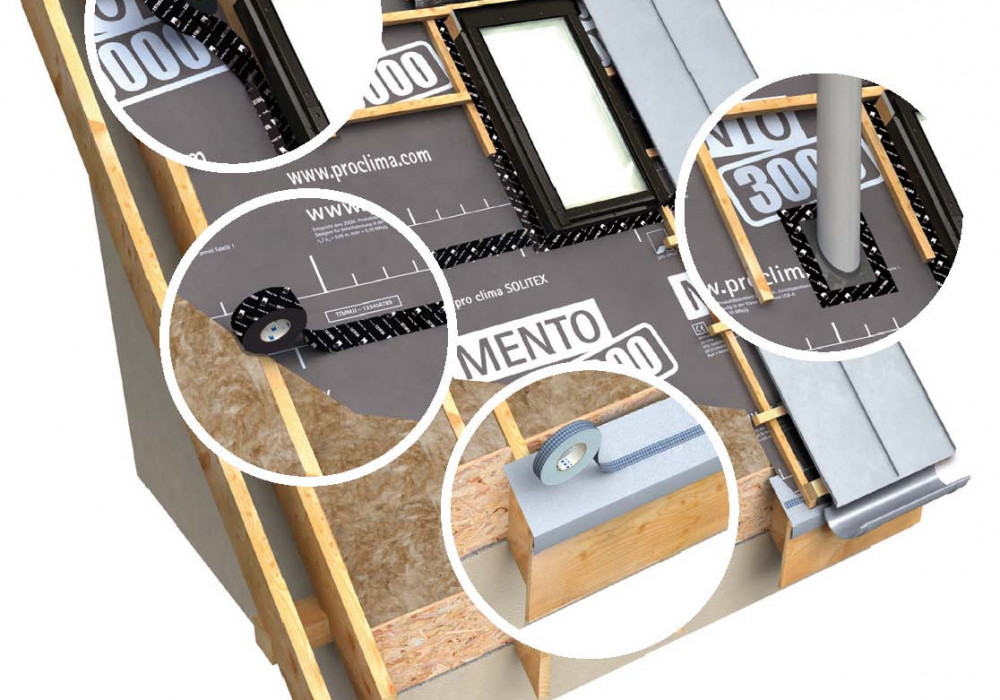
With reduced gravitational force to shed water quickly, the choice of roof underlays and membranes becomes particularly important in low-pitch assemblies. Products such as SOLITEX MENTO 3000 provide a vapour-permeable, non-porous underlay that resists bulk water penetration while allowing the roof structure to dry. This drying potential is essential for reducing long-term moisture stress.
For roofs below approximately 10° pitch, underlays should be fully supported on a substrate such as sarking and sealed at the laps. This prevents sagging, which could otherwise allow pools of moisture (and ice in colder regions of New Zealand) to collect in low points.
2. Ventilation pathways for moisture and heat management
For lower-pitch metal roofs, Above Sheathing Ventilation (ASV) becomes increasingly important. A ventilated cavity between the roof cladding and the underlay allows solar-driven convection to remove moisture from the roof assembly.
While both low and steep pitch roofs can make use of wind pressure to provide airflow, steeper roofs can experience stronger natural airflow due to the greater height difference between eaves and ridge, creating a natural stack effect. On low-pitch roofs, this effect is weaker, so the ventilation cavity must be made larger to compensate for the reduced airflow.
The same principle applies to heat management. Increased airflow beneath the cladding helps cool the roofing material and reduces heat stress on the layers below. Lower-pitch roofs, therefore, benefit from a larger ASV cavity to generate sufficient airflow for effective cooling.
3. Airtightness and internal moisture management
Just as Winter Olympic athletes wear high-performance clothing designed to retain warmth while allowing perspiration to escape, buildings must be intentionally designed to manage internal moisture loads. Ski jumpers may sweat in fear, but maybe a cross-country skier is a better analogy here.
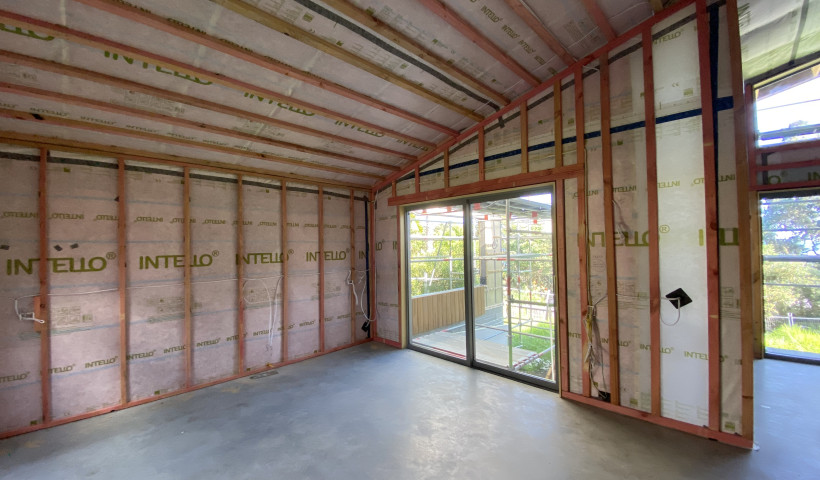
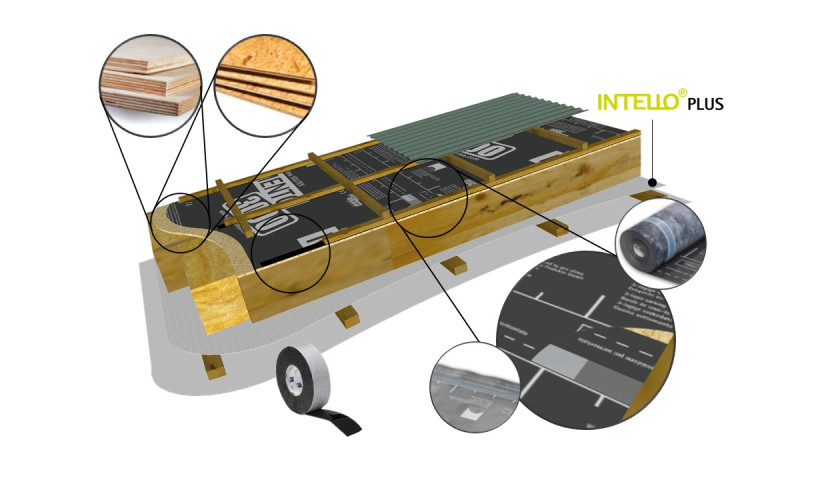
The best design prevents the problem. Controlling air movement with an internal air barrier, such as INTELLO, helps limit convective moisture transport into insulation layers and beyond into the external layers where it will condense on cold materials. When an air barrier control layer is combined with appropriate mechanical ventilation, vapour movement becomes controlled rather than accidental, significantly reducing condensation risk.
4. Detailing and integration at junctions
Careful detailing at roof junctions — including eaves, hips, ridges, and penetrations — is always important in roof design, but it becomes even more critical at lower pitches. Continuous weathertightness and airtightness systems, using monolithic membranes with proven durability, together with airtight tapes and seals at junctions, minimise unintended air and moisture pathways. This preserves the integrity of the roof’s thermal and moisture-control layers.
Conclusions
While Olympic ski jumpers have one opportunity every four years to demonstrate their perfect performance, design decisions made in roof construction influence building durability for 15 to 50 years or more. Good material selection and detailing at the outset are therefore critical, as rectifying poor design choices later will be both complex and costly.
Architects designing lower-pitch roofs must balance aesthetic with the physical realities of water and heat management. By applying a systems-based approach — specifying appropriate underlays, intelligent airtight barriers, and incorporating deliberate ventilation pathways — low-slope roofs can perform reliably even when gravity is providing little assistance.
Explore the principles of Above Sheathing Ventilation in Pro Clima's Technical Articles.
 Popular Products from pro clima
 Posts by Pro Clima Technical
 Most Popular