 VANTAGE Windows & Doors
 Roofing Industries
 ALTHERM Window Systems
 Dimond Roofing
 Juralco Aluminium
 SPAX
SPAX



 Prolam
 Case Studies
 PGH Bricks
 Metwood





 pro clima




 NEW
NEW
The removal of the Schedule Method from Clause H1 of the NZBC in November 2025 marked a fundamental shift in how residential buildings under 300m² are to be designed. From November this year, specifiers will no longer be able to rely on a simple “R-value checklist”. Instead, compliance must now be demonstrated using either the Calculation or Modelling Method, where the performance of the thermal envelope is assessed more holistically.
Moving beyond R-Values: Why airtightness matters
That thick woolly jumper you wear in the winter doesn’t keep you very warm if it’s too short or full of holes. Likewise, even ‘well-insulated’ assemblies will underperform if air is able to freely move through the insulation material itself, or through gaps in the assembly that the fluffy stuff forms part of. When air within the insulation is allowed to move rather than remain still, thermal performance is compromised — resulting in higher heating demand in winter, increased cooling demand in summer, and an elevated risk of condensation within wall and roof assemblies.
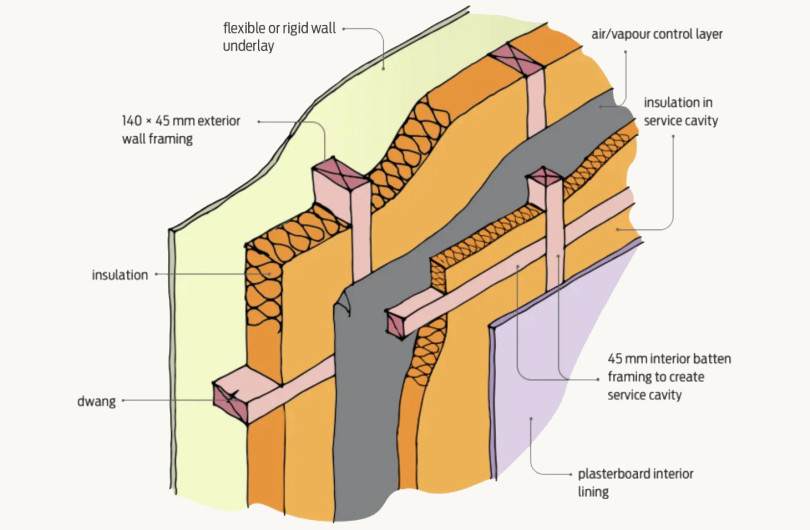
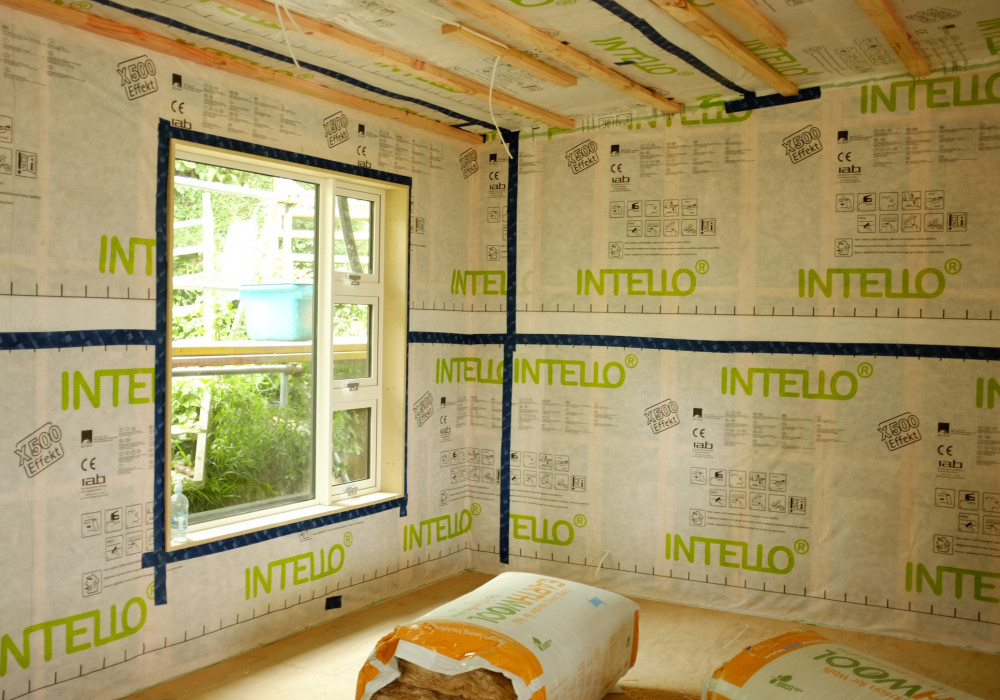
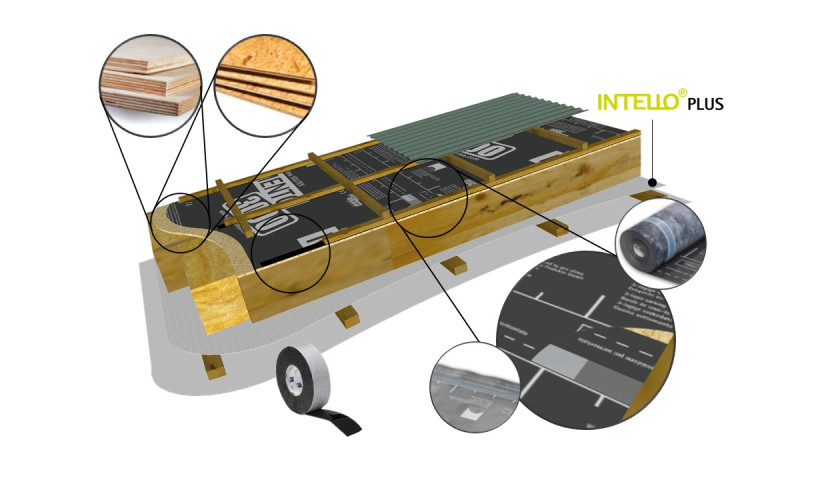
Airtightness membranes such as INTELLO PLUS address this directly by forming a continuous internal air barrier, helping designers achieve more predictable thermal performance in H1 calculations, as well as reducing the risk of interstitial condensation.
A system approach to H1 compliance
When working with either of the H1 compliance methods, designers now face the challenge of balancing competing elements such as windows, walls, roofs, and insulated floors, to reach the sweet spot of cost, buildability, and performance demands.
Improving the airtightness of the building envelope with products such as INTELLO PLUS provides a valuable lever in this equation. By reducing uncontrolled air infiltration, designers can:
- Improve overall energy performance in modelling tools such as PHPP & ECCHO
- Potentially reduce reliance on higher-spec (and higher-cost) insulation by enabling the insulation to perform to its true R-value
- Deliver more consistent and comfortable indoor temperatures for clients
Intelligent vapour control: Performance without moisture risk
We put on a woolly jumper to stop our body from getting cold, likewise when we insulate our buildings we are deliberately slowing the rate at which heat is lost through the envelope. And as moisture goes where heat flows, moisture management becomes increasingly important the more we insulate.
INTELLO PLUS is not just an air barrier — it is an intelligent vapour control membrane. Its humidity-variable diffusion resistance allows it to respond to seasonal conditions accordingly
- Winter: High vapour resistance reduces moisture entering the structure from the warmer interior side
- Summer: Increased permeability enables the wall cavity to dry back into the interior from the warmer exterior side
So not only does airtightness help us comply with Clause H1, but it also supports compliance with Clause E3 (Internal Moisture) and Clause B2 (Durability), with better management of internal moisture loads within the building envelope for the life of the building.
Supporting comfortable, healthy homes
H1 is ultimately about ensuring the best occupant outcomes, not just compliance metrics. Airtightness contributes to:
- More stable indoor temperatures
- Reduced draughts and cold spots
- Lower heating and cooling energy demand
When paired with mechanical ventilation systems, airtight construction enables designers to adopt a “build tight, ventilate right” approach — delivering consistent fresh air without relying on uncontrollable air leakage, or windows that might not always be open.
This also opens the door to:
- Reduced overheating risk through controlled and reliable ventilation
- Better indoor air quality
- Lower dependence on active heating and cooling systems
Making H1 easier: Design and specification support
As the industry transitions away from the Schedule Method, one of the biggest pain points is complexity. Designers are now navigating calculation tools and energy models that require new inputs and assumptions — including airtightness.
Pro Clima supports this shift by:
- Providing clear airtightness strategies that can be confidently incorporated into H1 calculations
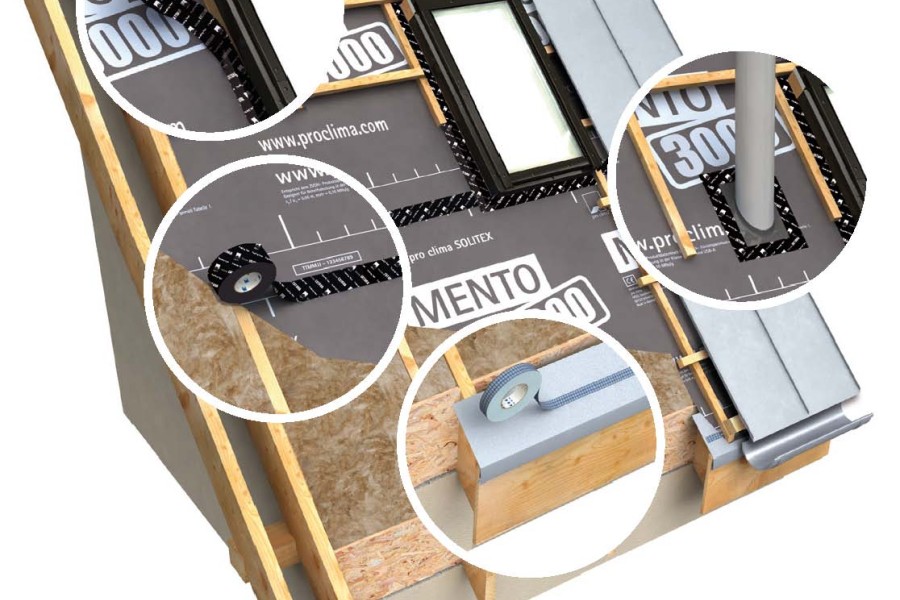
- Supplying detailing guidance to ensure continuity of the air barrier across walls, roofs, floors, and junctions
- Assisting with product selection and system design to align with modelling assumptions
- Offering on-site support and training to ensure buildability and performance in practice
Rather than treating airtightness as an abstract concept, INTELLO PLUS provides a practical and measurable solution that helps designers navigate the new H1 landscape with confidence — turning complexity into clarity, and compliance into high-performance designs that truly meet our clients' hopes and dreams.
 Popular Products from pro clima
 Posts by Pro Clima Technical
 Most Popular