 VANTAGE Windows & Doors
 Roofing Industries
 ALTHERM Window Systems
 Dimond Roofing
 Juralco Aluminium
 SPAX
SPAX


 Prolam
 Case Studies
 PGH Bricks
 Metwood





 pro clima





 NEW
NEW
Ask most people what keeps the weather out of a building, and they'll point to the cladding. While that may still be true, modern façade design and understanding have evolved considerably. Today's high-performance building envelopes rely on a layered approach, with the visible cladding acting as a rainscreen while the concealed Weather Resistive Barrier (WRB) behind it provides the building's actual defence against wind infiltration, wind-driven rain, uncontrolled air infiltration, and moisture ingress.
This shift in thinking is being driven by increasing performance expectations. Building designers are now expected to deliver façades that are not only weathertight, but also provide excellent airtightness, thermal efficiency, condensation control, durability and constructability while satisfying the performance requirements of the Building Code. Meeting these objectives is becoming less about selecting individual products, and more about designing integrated systems whose components have been engineered and tested to work together.
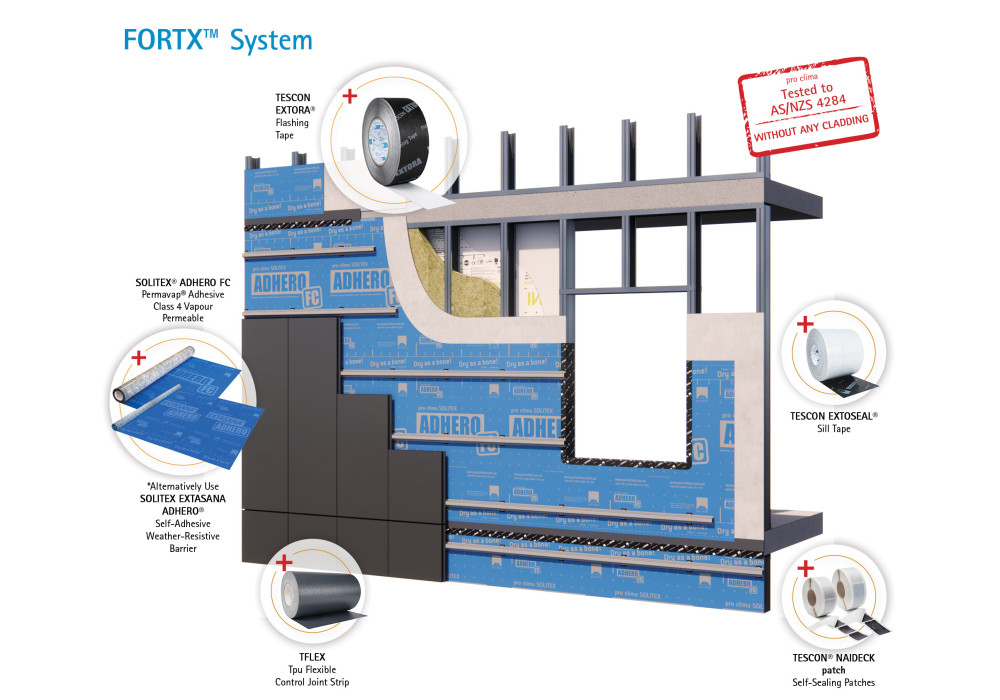
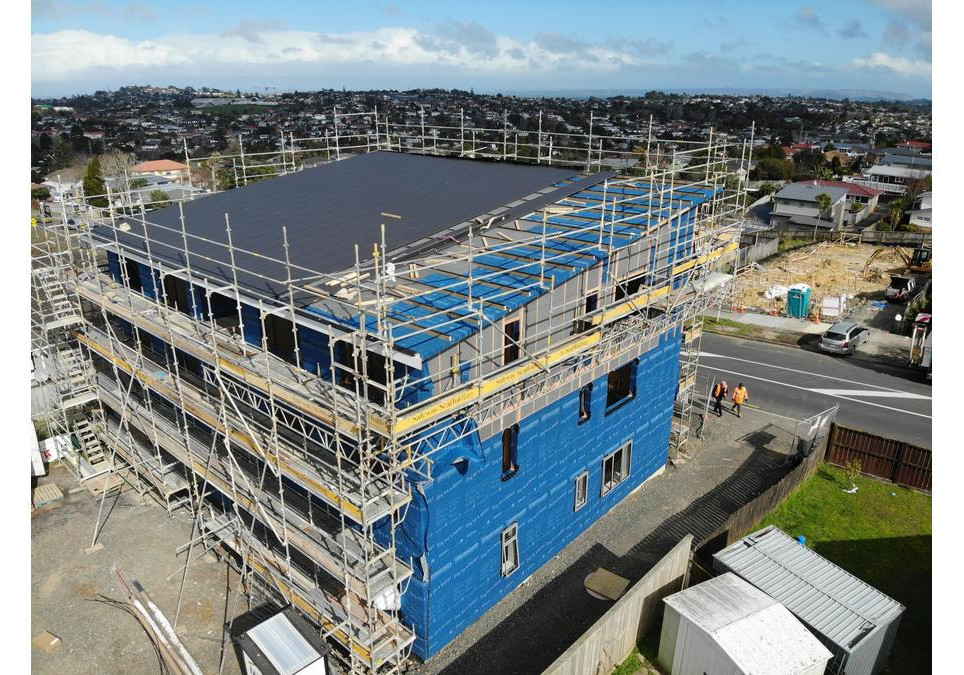
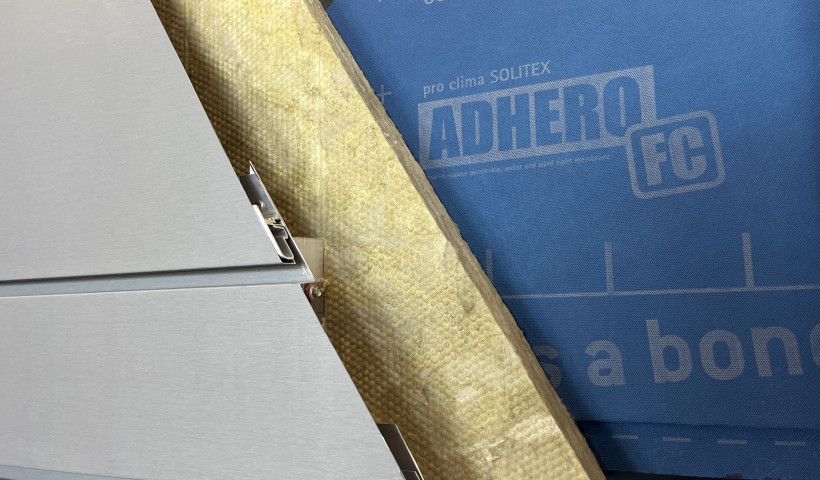
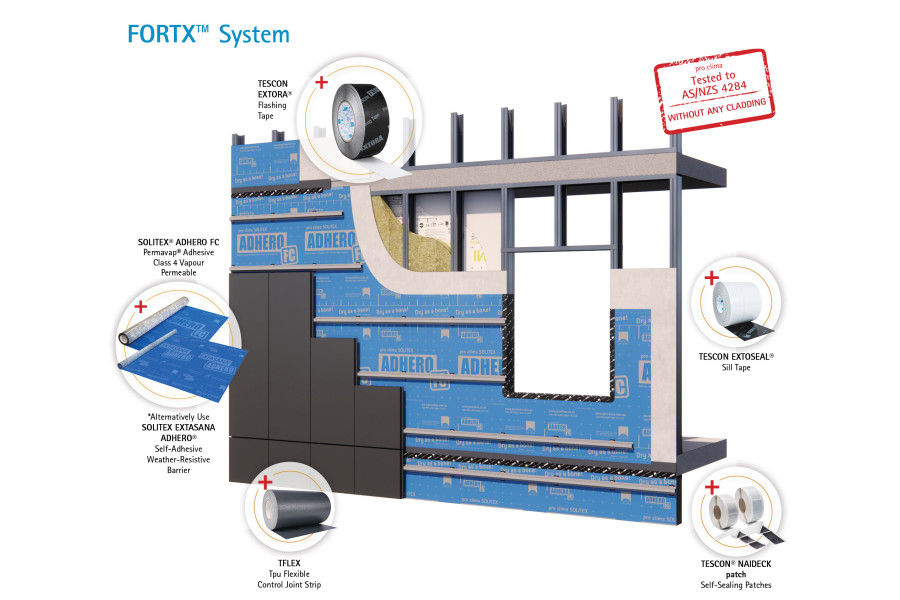
The pro clima FORTX and FORTX MELIOR systems have been developed around these principles. Rather than relying on the external cladding as the primary weather defence, these systems use a fully adhered WRB, together with compatible tapes, grommets, sealants and control joints, to create a continuous protective layer behind the façade. The cladding continues to perform an essential role by shedding the majority of the weather load and protecting the assembly from ultraviolet exposure, while the concealed WRB manages any moisture that bypasses the outer skin and controls unwanted air movement through the envelope.
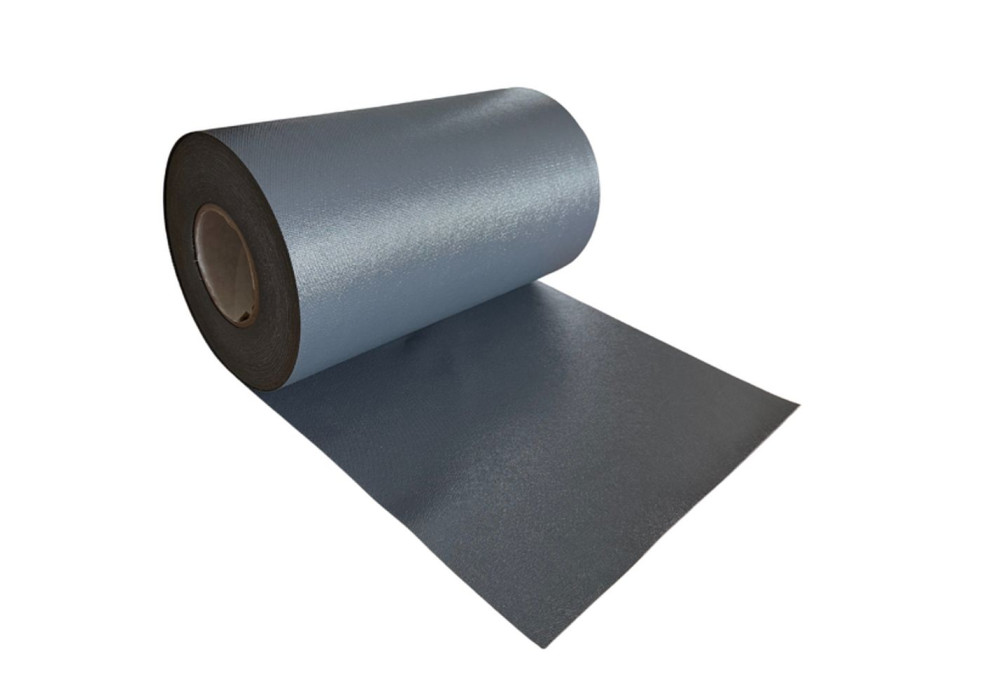
One of the system’s strongest technical credentials reinforces this thinking. FORTX has been tested as a complete façade assembly to AS/NZS 4284, the façade testing standard for Australia and New Zealand. The system demonstrated high levels of wind, water and seismic performance, including 3.5 kPa Serviceability Limit State (SLS), 5.5 kPa Ultimate Limit State (ULS), air leakage below 0.1 L/s/m², and seismic deflection capability of ±20 mm (SLS) and ±75 mm (ULS) with the use of TFLEX control joint material.
What makes these results noteworthy is that the WRB system not only exceeded the standard performance requirements of E2/VM2 in full-scale testing, but it did this without an external cladding layer. In practical terms, this demonstrates that the primary weather defence can already be established before the façade is installed. The cladding can therefore perform as a true rainscreen, without needing to be subjected to weathertightness testing itself, while the tested FORTX and FORTX MELIOR WRB systems provide the continuous weatherproofing layer behind it. Independent third-party engineering assessments of the FORTX and FORTX MELIOR systems test reports are now available for both New Zealand and Australian markets to support specification and streamline the design and consenting process.
Unlike laboratory testing of individual materials, AS/NZS 4284 testing evaluates how membranes, flashings, movement joints, fixings and interfaces perform together under realistic environmental conditions, including air infiltration, static and dynamic water penetration, structural wind loading and simulated building movement. This provides designers with confidence that the complete assembly has been independently verified as an integrated WRB system suitable for all building typologies.
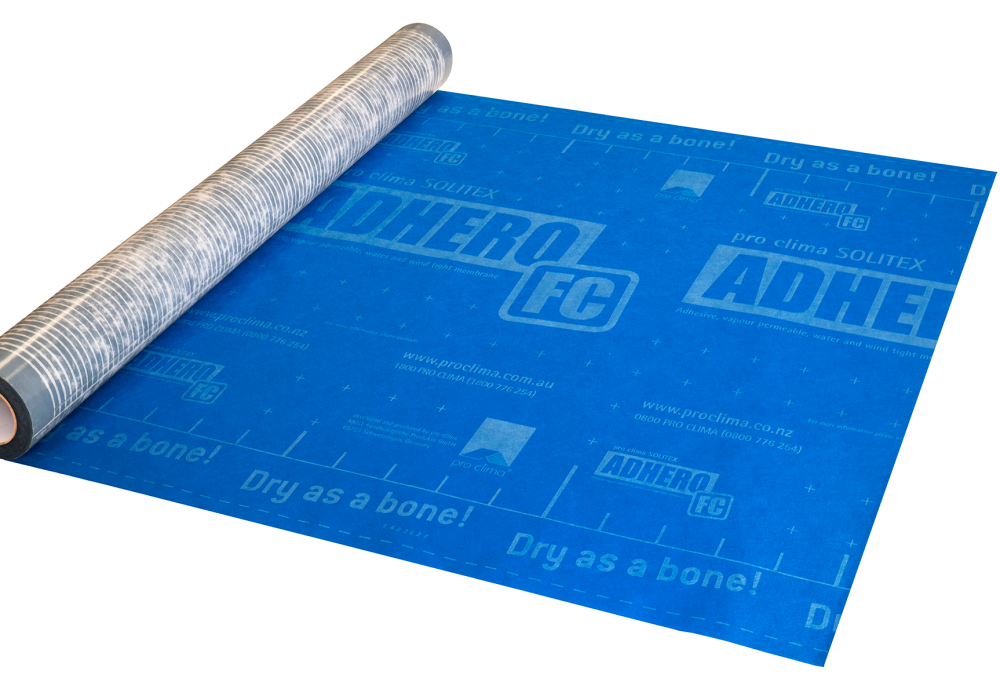
The use of the fully adhered WRBs SOLITEX EXTASANA ADHERO or SOLITEX ADHERO FC within the FORTX and FORTX MELIOR systems delivers practical performance benefits. Being bonded directly to the rigid substrate eliminates membrane billowing under wind pressure, reducing stress on fixings while improving resistance to pressure-driven water ingress. The result is a robust, durable building envelope designed to perform throughout the life of the building.
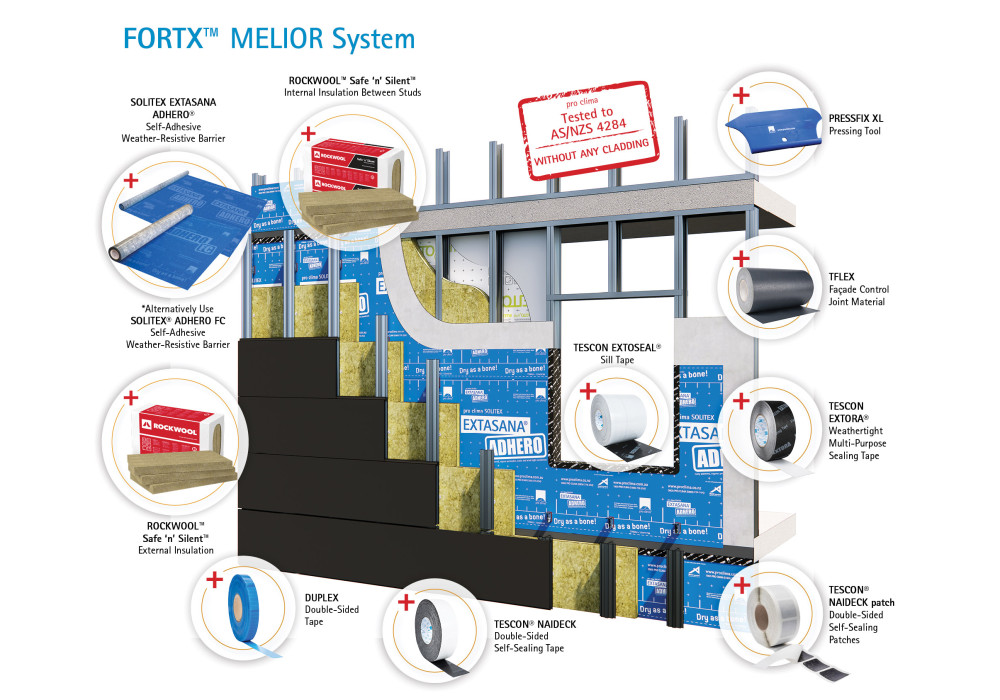
For projects targeting predictably higher levels of performance, FORTX MELIOR incorporates a continuous layer of external ROCKWOOL stone wool insulation over the WRB. Locating insulation outside the primary structure significantly reduces thermal bridging, particularly at exposed concrete slab edges and through steel framing common in commercial construction. It also keeps the structure warmer and reduces the risk of interstitial condensation within moisture-sensitive components. The non-combustible stone wool insulation also contributes to improved acoustic performance and supports façade fire design considerations.
By specifying an integrated, independently tested systems such as FORTX and FORTX MELIOR architects can simplify detailing, reduce construction risk and design building envelopes with greater confidence and more aesthetic freedom. In many respects, the most important part of a modern façade is no longer the cladding itself — it is the high-performance system working quietly behind it.
FORTX™ and FORTX™ MELIOR are registered trademarks.
 Popular Products from pro clima
 Posts by Pro Clima Technical
 Most Popular