 VANTAGE Windows & Doors
 Roofing Industries
 ALTHERM Window Systems
 Dimond Roofing

 Juralco Aluminium
 SPAX


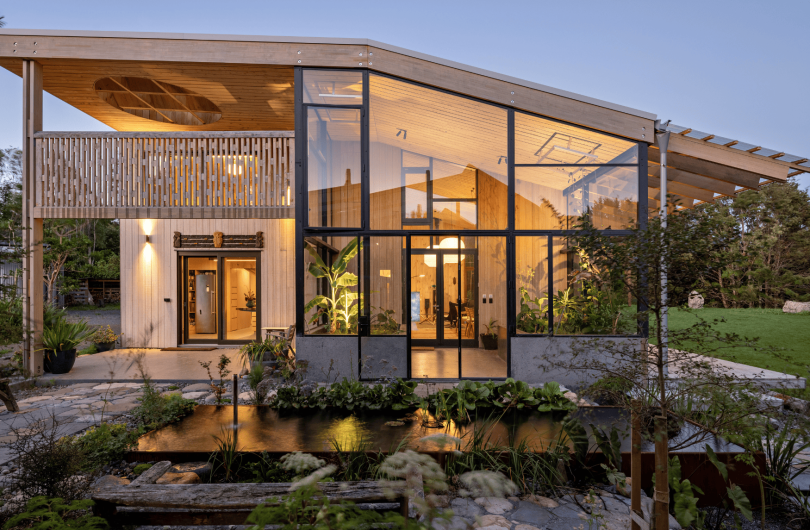
 Prolam
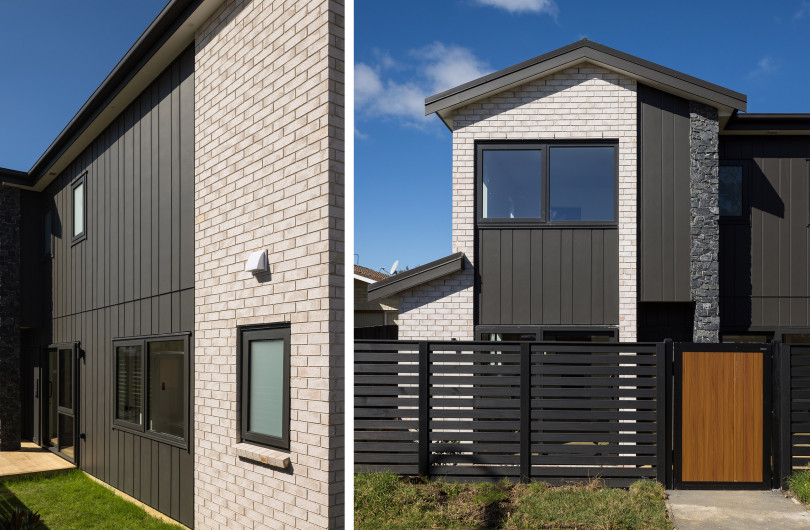
 PGH Bricks
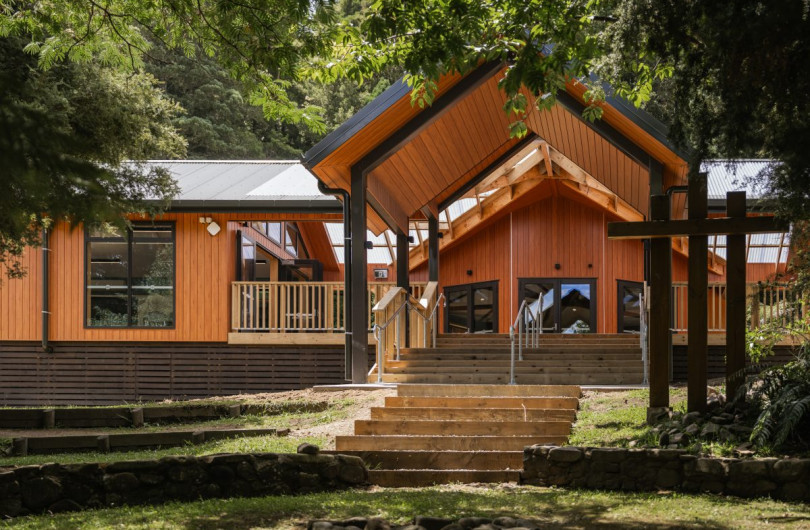
 Metwood

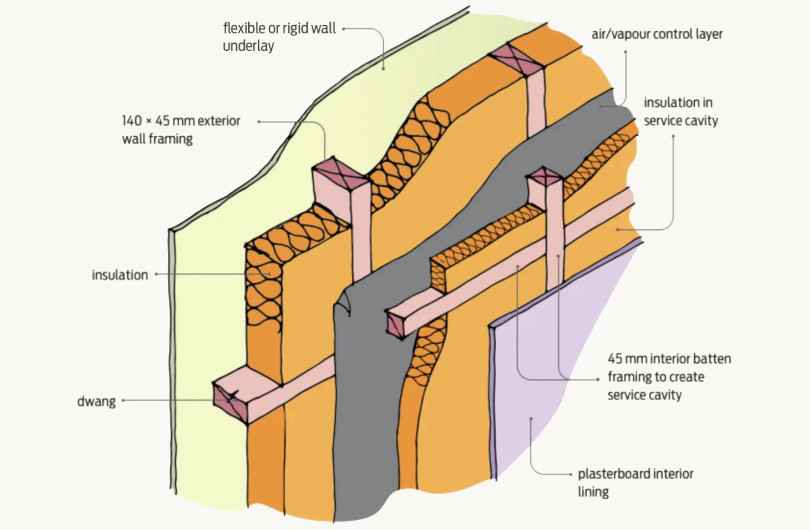





 Ecorate Ltd

The overarching and obvious explanation for the apparent disparity between the climate change average temperature’s extremely slow rise, and the ever fluctuating thermal comfort levels of housing, is caused by the difference between climate and weather. As the leader of a tramping trip says when asked by the group “What will the weather be?” the response is “We will have weather”, ie it cannot be predicted so prepare for the worst — both hot and cold. As Crowded House told us in the 1990s there are “Four Season is One Day”. Our homes, both existing and new, are subject to these same weather oscillations.
Yes, there are now periods of high temperatures which are being labelled as ‘Heat Waves’. These are several successive days of higher than average high temperatures for that season. (Scientists are now referring to ‘Heat-Storms’ which are being given identifying names.) These weather outliers, which are increasing in frequency and intensity, are a result of the increasing atmospheric instability caused by the very slowly increasing average global temperature. Is it possible to design our dwelling specifically for these exceptional hot (and cold) events, and is it necessary? Perhaps the problem can be ignored in the short-term but our present housing stock is meant to be around for the long-term.
In my EBOSS blog posts of July 2026 Medium Density Housing Needs Cleverer Design and of August 2026, Medium-Density Housing: Orientation and Topography, I discuss the necessity for a more fundamental approach to dealing with the overheating problem than by merely looking for solutions in an expanded NZ Building Code. Just ‘rearranging the deckchairs on the Titanic’ is not sufficient.
The flexibility of the sixth edition of NZBC-H1 is a better approach than before (but only a small beginning) in that it allows for more juggling of some of the fundamentals of a dwelling’s thermal performance. Nevertheless, the totality of the requirements are still a minimum — as they have to be. Also when the Code is applied it normally is only dealing with the thermal envelope around a single volume. This can enclose many dwellings. H1 is not just for standalone houses. Also the Code does not handle the presence of thermal mass which when properly used, in conjunction with opening windows, is a very useful passive temperature moderator. Unlike people, houses have only limited ability to continually adapt to the ever changing weather unless the architects and designers have given specific and innovative thought to this.
Unfortunately the residents of a home do not live in a single monthly average temperature (as used by many modelling methods); they live moment by moment in a wide dynamic range of temperatures across the 24 hour daily cycle which itself fluctuates within a month. This then varies cyclically across the four seasons of a year. In a home it is this hourly/daily/seasonal cycle which is experienced by the household within a particular dwelling, and even then felt differently by each individual.
With the design process for our multi-unit medium-density housing there is a significant mismatch between those who determine what is to be built and those who reside in these residences. There is a long time lag (measured in years) and virtually no communication, between the two. The designers need to answer to their commercial clients who have their focus on financial return concerns and a need to satisfy the current market. On the other hand, the buyers who will live in the dwellings are not able to ‘try before they buy’. It is only after several ‘Four Seasons in One Year’ that the occupants fully experience what they have purchased. Even then only a very small minority formally complain to those who determine what will be supplied to the market.
When I have spoken with the suppliers to the housing market there is recognition from some that thermal comfort is a problem which needs to be addressed and they say they will do better next time. The difficulty is that tomorrow never comes; it is always today.
One path to the wider recognition of overheating which may lead to change is the growing understanding by the buying public that the problem exists. There is publicity from BRANZ, local authorities, the NZ Green Building Council, building industry professional bodies, to name but a few. Now the media is beginning to take up the call which will accelerate change, albeit slowly, within the residential development providers.
I readily admit that overheating is a complex problem to address primarily because there is no such thing as a 'standard occupier' (both in regard to comfort and aesthetics, etc.), nor an unchanging climate and weather environment, nor a standard site to provide a predetermined and constant orientation and topology, to name but a few. The simple answer is to throw mechanical equipment into the mix, as is being done at present with the ubiquitous heat pump, and then carry on as before. Is this good enough?
Through EcoRate Ltd – Architect, I provide objective independent passive solar thermal performance simulation (using dynamic AccuRateNZ computational software) and comment on sustainability matters, to Architects, Designers, Builders, Manufacturers, and others in the construction industry, included those proposing to build a new Home. For more information feel free to contact Keith at EcoRate Ltd on 021 890 251, [email protected], or our website www.settlement.co.nz.

 Most Popular
 Popular Products