 VANTAGE Windows & Doors
 Roofing Industries
 ALTHERM Window Systems
 Dimond Roofing
 Juralco Aluminium
 SPAX
SPAX



 Prolam
 Case Studies
 PGH Bricks
 Metwood






 Mammoth Insulation
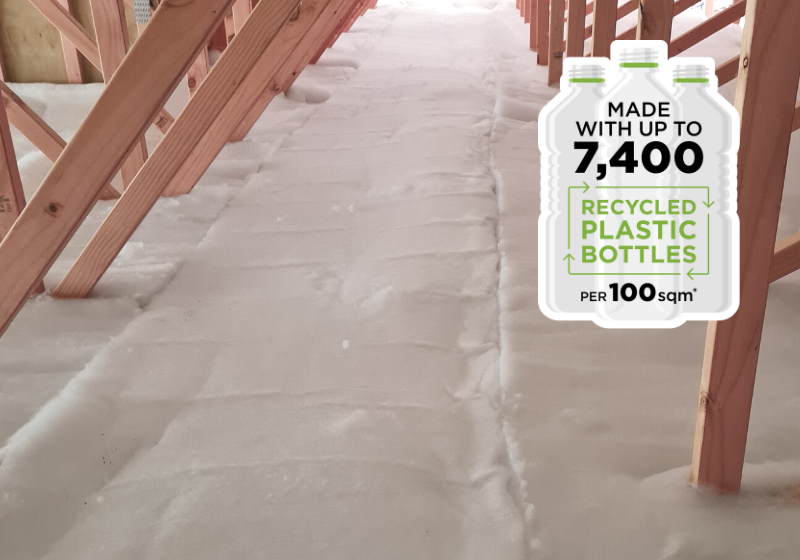


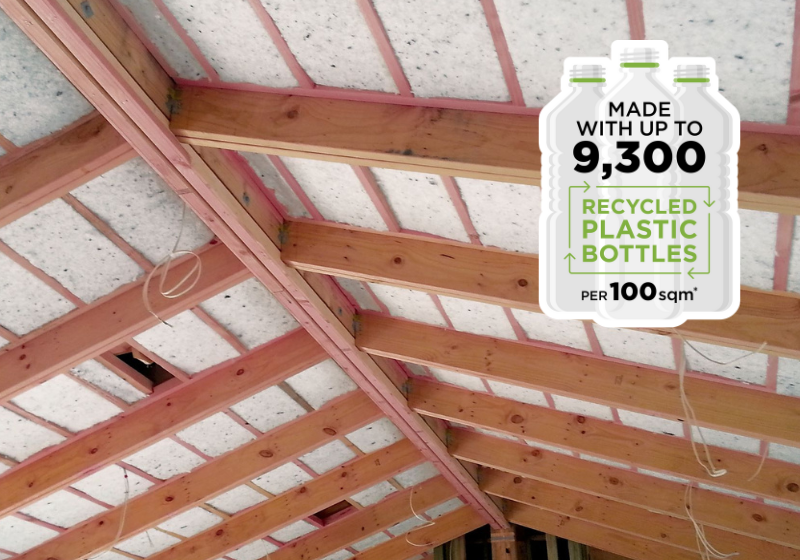


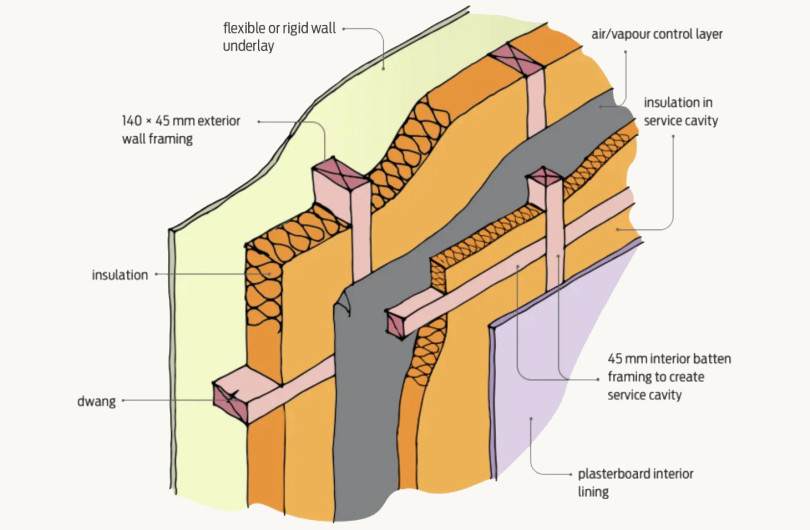
There are two common questions the Mammoth team get asked about in the insulation space when it comes to roofs. What is the smallest rafter I can use? And how do you deal with a low pitch truss roof, or the reduced edge for that matter? Both have relatively simple solutions, and are ultimately addressed through the H1 calculation. It’s worth understanding these factors as they have a bearing on the design, along with cost.
Rafter roofs
With the H1 changes that came at the end of last year, the minimum construction R value a roof can now have is R2.6, with a reference still of R6.6. A 190mm rafter is often sufficient to achieve compliance on typical projects. Whether the design is 20% glazing or 40% glazing, showing compliance by calculation or modelling method can provide a satisfactory result. Below are suggestions for insulation build-ups suitable for various rafter sizes.
140mm rafters
This is something we would tend to use for a smaller area, perhaps an alteration, or part of a roof design, rather than an entire house. Not that this is impossible, but generally speaking, 140mm rafters are used due to limited depth and span. Insulation options include Mammoth R2.9 115mm or R3.6 140mm, as a minimum. The latter requires the cavity in the purlin space to maintain the required 25mm separation between the underside of any roofing material and the insulation. Insulation underneath the rafter, in the ceiling battens is also an option, with Mammoth’s R1.0 or R1.3 ceiling batten insulation. This reduces thermal bridging and raises the construction R value considerably. With the suggested build-ups, one can expect R2.8 to R4.5 depending on the combination, as an overall construction R value.
190mm rafters
Using R3.6 165mm Mammoth friction fit along with Mammoth ceiling batten insulation, one would see a construction R value of approximately R4.6. This is a reasonable build-up that offers a fair construction R value, with significantly reduced thermal bridging.
Larger rafters
Larger rafters such as 240s or 290s can achieve relatively high values, anywhere from 4.0 to R7.7 construction R value. Compliance-wise, this is not always required, and the higher value build-ups tend to add greater cost as does the deeper framing like a 290 rafter. These build-ups are effective at compensating for lower R values elsewhere, or larger areas of glazing. Combinations such as R4.1 plus batten insulation achieve decent construction R values while maintaining a fair price point.
Low pitch truss roofs
Like rafter roofs, truss roof minimum construction R-values have also been reduced to R2.6, compared with the previous minimum of R3.3 under the calculation method. This change provides greater flexibility, particularly around roof edges. A frequent question concerning truss heel height is whether a raised heel truss is required. In general, the higher the heel and the steeper the roof pitch, the more insulation can be installed, resulting in better thermal performance and making it easier to demonstrate compliance with the H1.
Roofs with a shallower than normal pitch may therefore require a raised heel. However, depending on how one calculates their roof build-up, a raised heel is not necessarily required. Averaging the roof's R value is the most realistic approach, much like one does with a wall, considering the average value of framing and so forth, the same can be done with a roof. Looking at the feathered area of product at the perimeter, height restriction and roof pitch, an average can be calculated.
H1 compliance support
Mammoth offers a free H1 calculation service to assist designers, architects and builders. They look at the most practical build ups that will show compliance, while considering the cost implication. They offer the modelling method along with the calculation method as part of the service. The modelling tends to achieve good results, looking at theoretical true building performance, overheating, considering solar gains and losses etc. It is the most accurate tool we have to get an idea of performance.
If you’re interested in using the service, or would like some technical support, contact Jeremy on [email protected] or Justin on [email protected]


 Popular Products from Mammoth Insulation
 Most Popular
 Popular Blog Posts