 VANTAGE Windows & Doors
 Roofing Industries
 ALTHERM Window Systems
 Dimond Roofing
 Juralco Aluminium
 dormakaba


 Prolam
 Case Studies
 PGH Bricks
 Metwood





 Mitsubishi Electric


 NEW
NEW
The challenge of high-performance homes
As residential architecture continues to move toward tighter building envelopes, higher glazing ratios, and improved thermal performance, maintaining healthy indoor environments has become increasingly complex. Homes are now better insulated and more energy efficient than ever, but without carefully considered ventilation and temperature control, these gains can unintentionally increase the risk of internal moisture build-up, overheating, and uneven comfort.
Moisture is a whole-of-home issue
In today’s airtight homes, moisture is no longer confined to kitchens and bathrooms. Everyday activities such as cooking, showering, drying clothes, and simply occupying a space generate significant moisture that can linger if not managed effectively. Over time, this can result in condensation, mould growth, and reduced indoor air quality, impacting both occupant wellbeing and long-term building durability.
For architects, the challenge is clear:
How do you manage indoor climate without compromising spatial planning, ceiling aesthetics, or architectural intent?
An integrated approach to ventilation and comfort
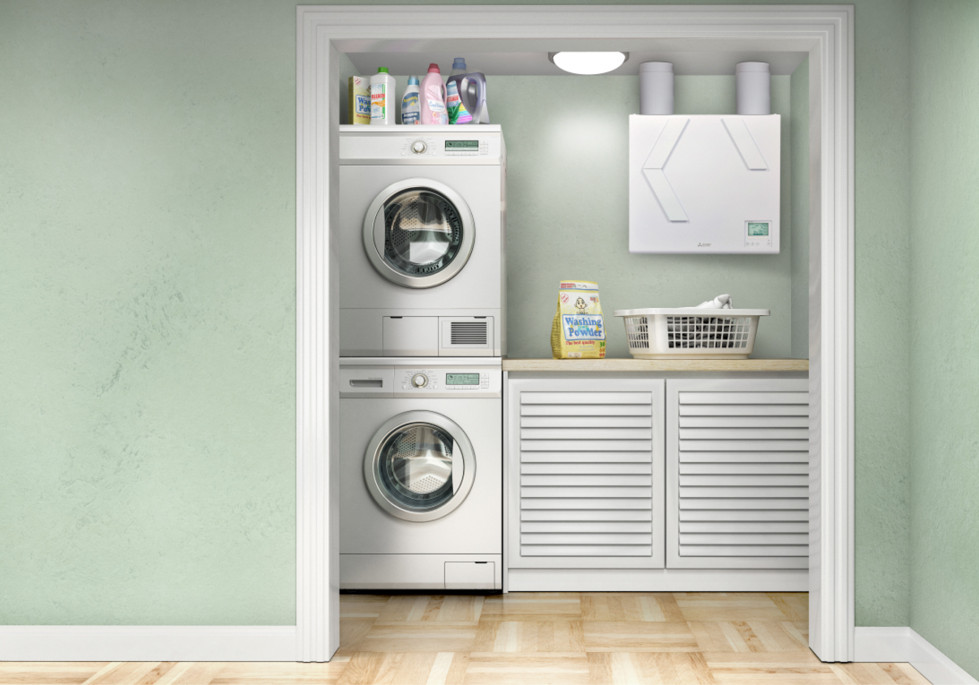
While it remains essential to manage moisture at its source through good design and targeted extraction, a whole-of-home approach that integrates balanced ventilation with heating and cooling offers a practical solution that assists in maintaining a healthy indoor environment. A whole-of-home approach that integrates balanced ventilation with heating and cooling offers a practical solution. Heat recovery ventilation systems, such as Mitsubishi Electric Lossnay, continuously supply fresh outdoor air while expelling stale, moisture-laden indoor air. Crucially, the outgoing air is used to pre-warm (or pre-cool) incoming fresh air, maximising energy efficiency and reducing* the overall heating and cooling load on the home.
Key benefits include:
- Alleviate internal moisture and condensation risk
- Improved indoor air quality across all living spaces
- More stable indoor temperatures year-round
- Lower energy demand for heating and cooling*
* Compared to the use of a 100% fresh air, conventional ventilation system.
Architectural advantages of ducted systems
When paired with a ducted heating and cooling system, ventilation becomes part of a cohesive and discreet indoor climate strategy. Temperatures are evenly distributed throughout the home, avoiding hot or cold zones, while systems operate quietly in the background.
From an architectural perspective, ducted solutions are particularly appealing because:
- Only subtle, unobtrusive grilles are visible
- Clean ceiling lines and interior detailing are preserved
- Mechanical systems remain largely invisible within the built form
Ventilation features such as automatic summer bypass or free cooling modes further support comfort by proactively reducing overheating during warmer months, without relying on occupant behaviour. When Mitsubishi Electric ducted air conditioning and Lossnay are connected via Wi-Fi Control, system performance becomes visible rather than hidden from the homeowner’s app.
Supporting better outcomes through early coordination
Early consideration of ventilation and ducted system layouts can simplify coordination across disciplines. With guidance around system selection, diffuser placement, and integration strategies, architects can confidently incorporate effective moisture and climate control solutions while retaining design flexibility.
Designing for comfort, health, and longevity
As expectations around comfort, health, and building performance continue to rise, indoor climate design is becoming a fundamental part of residential architecture. By integrating ventilation and temperature control as a single, considered system, architects can deliver homes that are not only energy efficient but also healthier, more comfortable, and resilient over time.
To learn how integrated Lossnay heat recovery ventilation and Mitsubishi Electric ducted air conditioning systems can be incorporated into your next residential project, the Mitsubishi Electric team can provide early-stage guidance and technical support to assist with system selection and application.

 Popular Products from Mitsubishi Electric
 Most Popular
 Popular Blog Posts