 VANTAGE Windows & Doors
 Roofing Industries
 ALTHERM Window Systems
 Dimond Roofing
 Juralco Aluminium
 SPAX
SPAX



 Prolam
 Case Studies
 PGH Bricks
 Metwood







 MiTek New Zealand Limited
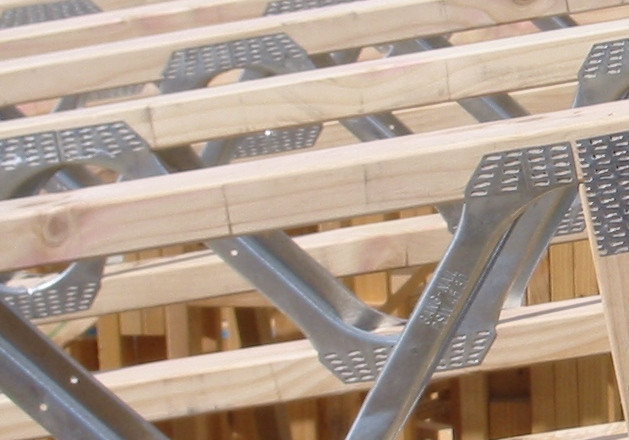

Meeting the thermal requirements of Clause H1 has become an increasingly important consideration for architects, designers and builders. Achieving compliance while maintaining design flexibility often requires careful evaluation of structural systems and insulation performance.
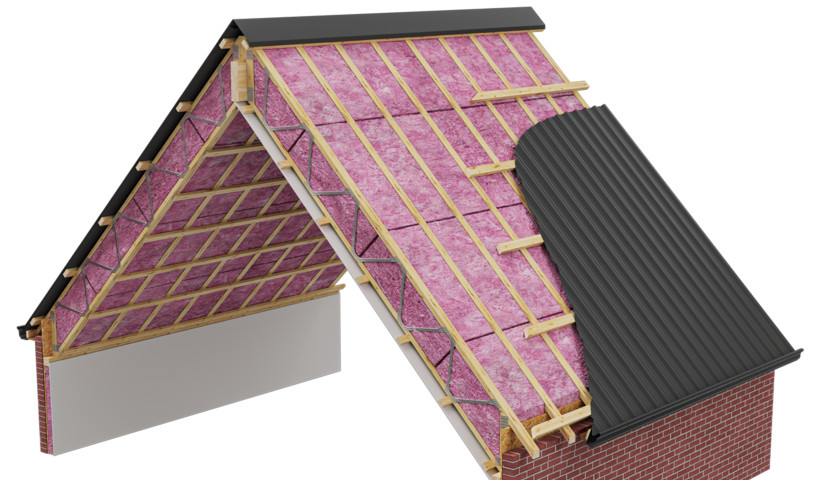
For projects utilising skillion roofs, engineered open-web systems such as MiTek Posi-Strut Rafter Trusses offer significant structural advantages, including long spans, reduced weight and prefabricated installation efficiency. However, uncertainty around thermal performance has historically limited specification.
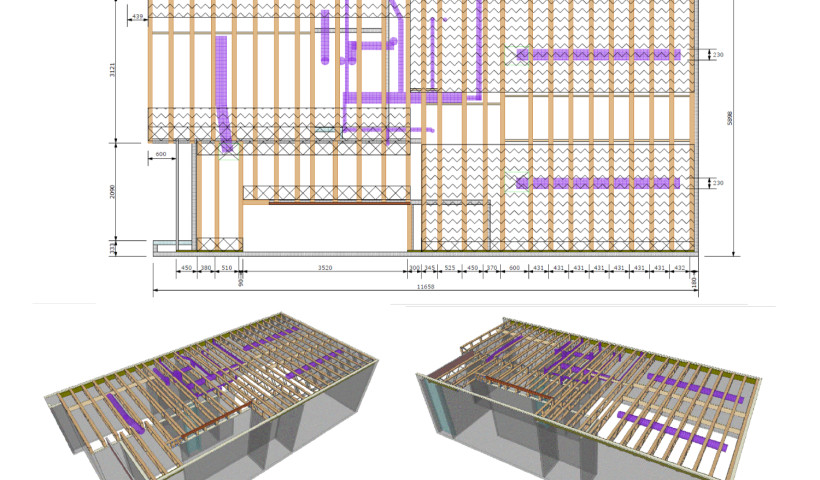
To better understand this, MiTek partnered with Sustainable Engineering to undertake detailed 3D thermal modelling of Posi-Strut Rafter Trusses. The findings confirmed that the thermal calculations produced by Design Navigator are accurate. More importantly, they demonstrated that when the Posi-Strut core is correctly insulated, roof systems can achieve code-compliant R-values. The modelling also identified an opportunity to further improve thermal performance through the appropriate use of non-rigid ceiling insulation.
As Design Navigator Director Albrecht Stoecklein explains:
"Where a Posi-Strut rafter truss roof uses non-rigid ceiling insulation, such as fibreglass batts, the 'Thermal Break' can be set to 'Generic – Airgap, upward heatflow (ceiling) 10–40 mm' to represent the air channels created beneath the rafters by the ceiling battens. The assumption is that the non-rigid ceiling insulation will sag, creating air gaps under the bottom chords, which are assumed to be ‘still air gaps’ meeting the requirements of NZS4214. This improves the overall thermal performance of the roof system."
To support industry adoption, MiTek has developed a practical Design Navigator guide that outlines the correct input parameters for specifying Posi-Strut Rafter Trusses and explains how designers can maximise thermal performance when non-rigid ceiling insulation is incorporated.
With validated modelling and clear specification guidance now available, thermal performance no longer needs to be a barrier when selecting Posi-Strut Rafter Trusses. Instead, designers can confidently specify a system that delivers structural efficiency alongside compliance with New Zealand's evolving thermal performance requirements.
Download the Design Navigator Guide for Posi-Strut Rafter Trusses to learn the recommended Design Navigator inputs and best-practice approaches for achieving compliant thermal performance in skillion roof applications.
 Popular Products from MiTek New Zealand Limited

 Most Popular
 Popular Blog Posts