 VANTAGE Windows & Doors
 Roofing Industries
 ALTHERM Window Systems
 Dimond Roofing
 Juralco Aluminium
 dormakaba



 Prolam
 PGH Bricks
 Metwood







 Allproof Industries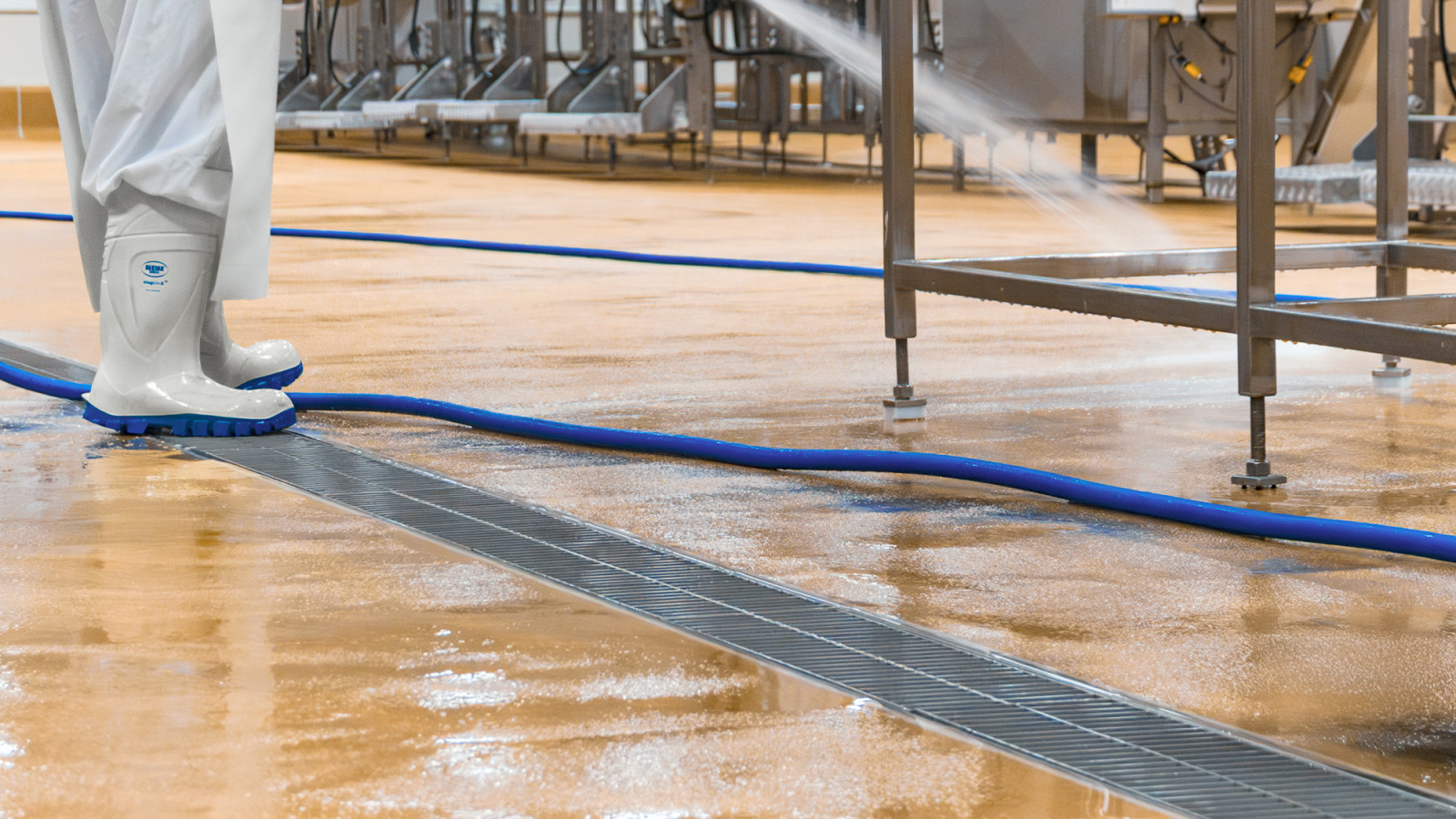
When planning commercial kitchens and food / beverage production facilities, the design and layout is often critical for operational efficiency, and ultimately the profitability of the client. When planning these facilities, the processes, production line, equipment and fixtures are all considered to ensure that the infrastructure is incorporated into the building to optimise operational performance.
While soft infrastructure, and some hard infrastructure (such as power outlets), can easily be modified to optimise the facilities, some infrastructure can be challenging to adjust post-construction.
Modifying drainage systems installed into the concrete slab of a facility will likely cause substantial disruption to the operations. Therefore, during the design stage it is important to specify a drainage system that caters to the activity of the facility, allows for the desired layout and delivers reliable performance.
Hygiene is crucial for food facilities. Selecting a system constructed from 304 or 316 grade stainless steel improves the maintenance and cleaning processes. Stainless steel contains no pores, cracks, or open spaces for bacteria, including odour, to embed itself in, as it is a self-contained piece of material. It is easy to clean and highly resistant to chemical and physical impacts.
Regarding performance, there are several variables that contribute to the final product selection. What is the level and type of demand the channels will see? Is the area only washed down intermittently or is there a regular sluicing or dumping of water creating a short, but high demand on the channel and components? A narrow clear opening such as a 20mm wide slot drain can be hydraulically bridged in a large dump of water (i.e. equipment malfunction), a wider clear opening such as 100mm or 200mm offers better catchment in this scenario. However, a 20mm slot drain performs well under low but regular flow, such as during a wash down.
The amount and type of solids present will determine grate selection and requirements of strainer baskets to separate solids before entering the wastewater system. In butchers and other processing facilities wide grate openings allow large debris to be washed away, removing hazards from the floor. These are then collected with a strainer basket or dealt with further down the system.
The type of facility may dictate specific attributes required of the drainage system, such as grates with load rating and slip resistance. If forklifts or pallet jacks are present, the system will need to be sufficiently designed to accommodate their weight as this traffic passes over it.
In fast paced environments slip resistance will be integral. Service staff may enter a restaurant kitchen, therefore a heelproof grate might be needed which uses reduced openings to prevent heels becoming caught and causing injury.
Allproof have a wide depth of experience and offer a range of systems that can be custom made to suit the layout and requirements of a project by utilising a large team of fabricators and advanced in-house manufacturing facilities. Additionally, if under time pressure, Allproof stock off the shelf solutions which are available in modular components and can be assembled into layouts that will suit most applications.

 Most Popular
 Popular Products