You are using an outdated browser version not supported by this website.
Click here to upgrade your browser

InteriorInterior
Indoor Dry Area Tiling, Residential and Commercial Builds
Description

A complete system for installing ceramic and porcelain tiles in internal dry zones across residential and commercial projects. The system covers substrate repair and planeness correction, optional moisture vapour control for dry areas, high-wetting C2TES1 and C2TES2 adhesives for reliable bond, and CG2 WA cement or RG epoxy grouts for durable, low-maintenance results.

It is designed to support fast, tidy installation and predictable performance, with a simple care pathway that uses neutral pH cleaning and, where suitable, penetrating protection on porous tiles to reduce staining and cleaning effort.

Key Features
  • Defines substrate flatness targets for large and standard format tiles to minimise lippage and control adhesive bed thickness.
  • Supports full-spread trowelling and back-buttering where required to achieve uniform contact coverage.
  • Provides clear movement-joint rules so joints are shown on drawings and carried through finishes.
  • Matches primers to substrate porosity to promote adhesion and control absorbency.
  • Includes bonded screeds and self-levelling options to correct plane and meet programme demands.
  • Offers C2TES1 and C2TES2 adhesives for porcelain and stone, including low-slip and extended open-time options for accurate placement.
  • Specifies cement grout for general areas or epoxy grout for hygiene, chemical cleaning or colour stability.
  • Introduces a practical care pathway using neutral pH routine cleaners and periodic deep cleaning, with optional penetrating protection on porous stone or unglazed tiles, aligning with Fila Solutions good practice.
NZ-Owned Business
NZ-Owned Business
Scope of Use
  • Interior dry floors and walls in residential and commercial buildings.
  • Suitable substrates include cured concrete and cementitious screeds that can be brought within tolerance for planeness and rigidity.
  • Plane correction and regrading can be achieved with bonded screeds or self-levelling compounds before tile fixing.
  • Adhesives are selected to tile type and format, including large format porcelain and natural stone.
  • Grouting is selected to performance and cleaning regime, with cement or epoxy options.
  • Movement joints are required at perimeters, over structural joints and at centres per design. Typical spacing is 6m internal floors, or 4.5m where sun-exposed, and 3 to 4.5m on walls. Spacing may be reduced by 15 to 20 percent when flexible adhesives are used.
Limitations on Use
  • Not for exterior decks, facades or immersed environments.
  • Not a substitute for structural crack control, tanking or negative-side waterproofing.
  • Substrates must meet planeness, strength and deflection criteria before tiling.
  • Moisture vapour barrier products used in dry internal zones are not waterproof membranes.
  • Movement joints must not be omitted or bridged and must be carried through finishes where present in the structure.
Statement of Building Code Compliance
  • When designed and installed in accordance with this system and good trade practice, the system can contribute to compliance with the New Zealand Building Code, including B2 Durability and F2 Hazardous Building Materials.
  • Industry standards and guides referenced in practice include AS 3958 (Tiling), AS 3740 (Internal Wet Areas, when relevant to adjacent wet areas), AS 4858 (Membranes, for reference in related wet areas), the IWAM Code of Practice, and the Tile Association of New Zealand Best Practice Guide.
In-Service History

Technokolla tiling systems distributed by Surtec are used throughout New Zealand and internationally in homes, retail, hospitality, health, education and workplace interiors. Components are selected to EN and ISO classifications for predictable, repeatable installation outcomes.

Other Performance Attributes
  • Cement grout range provides colourfast shades with additives to inhibit mould growth and simplify cleaning.
  • Epoxy grout provides dense, low-absorption joints with chemical and stain resistance for demanding regimes.
  • Quick-setting levellers and bonded screeds support compressed programmes and controlled shrinkage.
  • Care pathway supports lifecycle value using neutral pH routine cleaners, periodic deep cleaning where mineral residues or traffic films accumulate, and optional penetrating protection for porous stone or unglazed tiles in spill-prone zones.
Documents
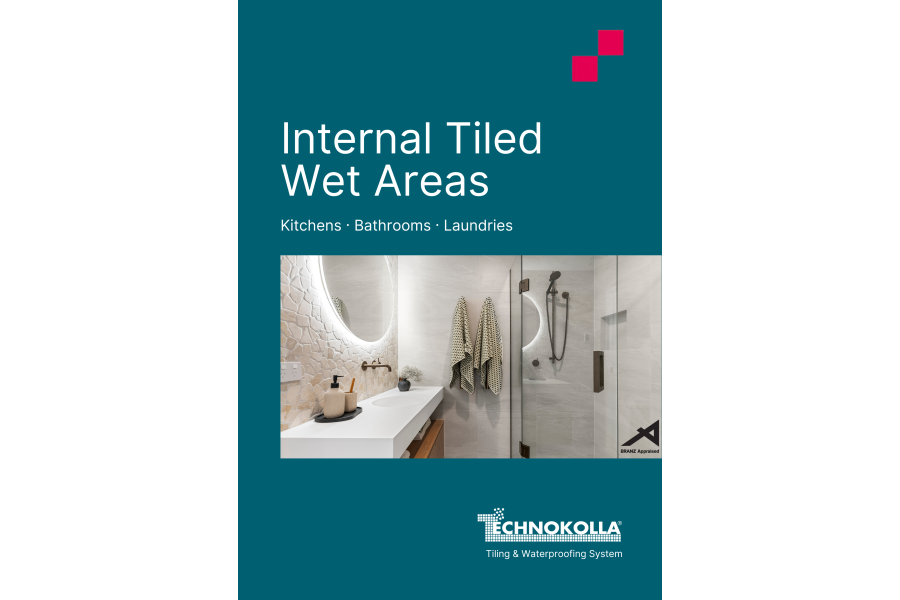
Indoor Dry Area Tiling: Residential & Commercial Builds

250901

Manual: Interior Dry Area Tiling

251001

Technokolla’s tiling and waterproofing systems offer BRANZ-appraised performance for NZ residential & commercial projects, complying with NZBC, and IWAM best practice; backed by a 15 year warranty.

Product Enquiries

News from Technokolla

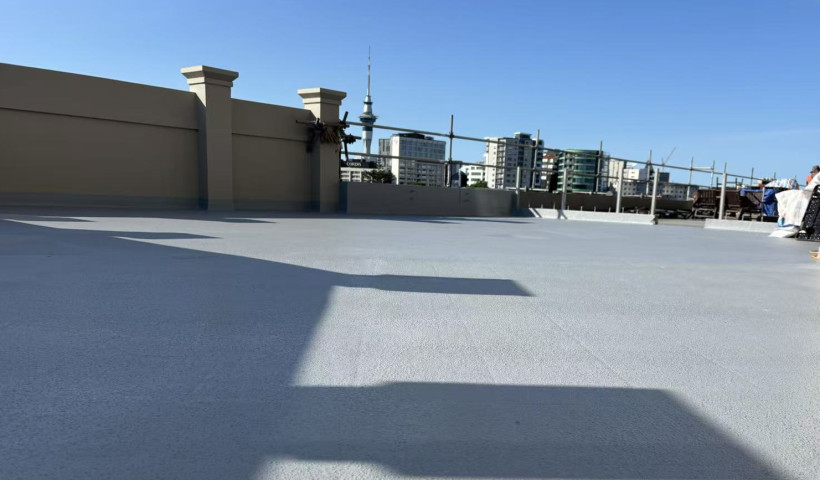
Remediating a Tiled External Terrace Deck with Technokolla Rasolastik EVO and Rhino TUFF STUFF
A BRANZ Appraised Waterproofing & Tiling System, Supplied and Supported in NZ by Surtec
Get a free weekly digest of essential news

New and updated architectural products, design solutions, inspiration, technical advice and more when you sign up for EBOSS.