 VANTAGE Windows & Doors
 Roofing Industries
 ALTHERM Window Systems
 Dimond Roofing
 Juralco Aluminium
 SPAX
SPAX


 Prolam
 Case Studies
 PGH Bricks
 Metwood




 Burgess Matting and Surfacing


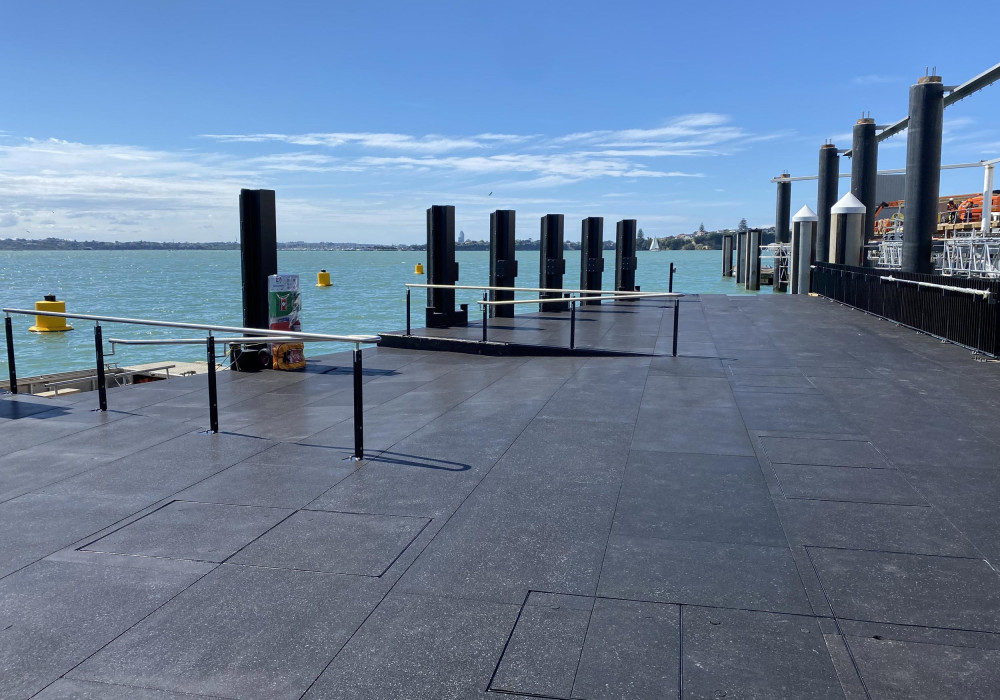


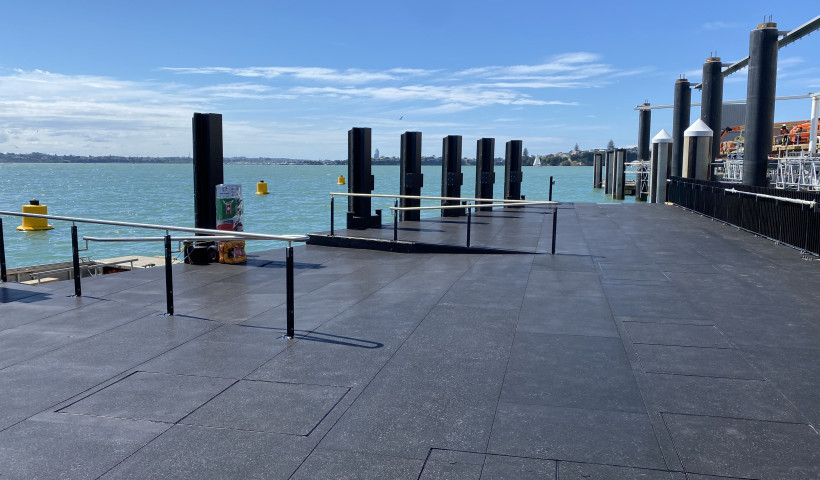
Public transport environments demand flooring systems that combine durability, safety, ease of maintenance, and consistent performance in all weather conditions. These requirements are especially pronounced in marine settings such as ferry terminals, where pedestrian surfaces must perform under regular wetting, high foot traffic, and the operational constraints of coastal infrastructure.
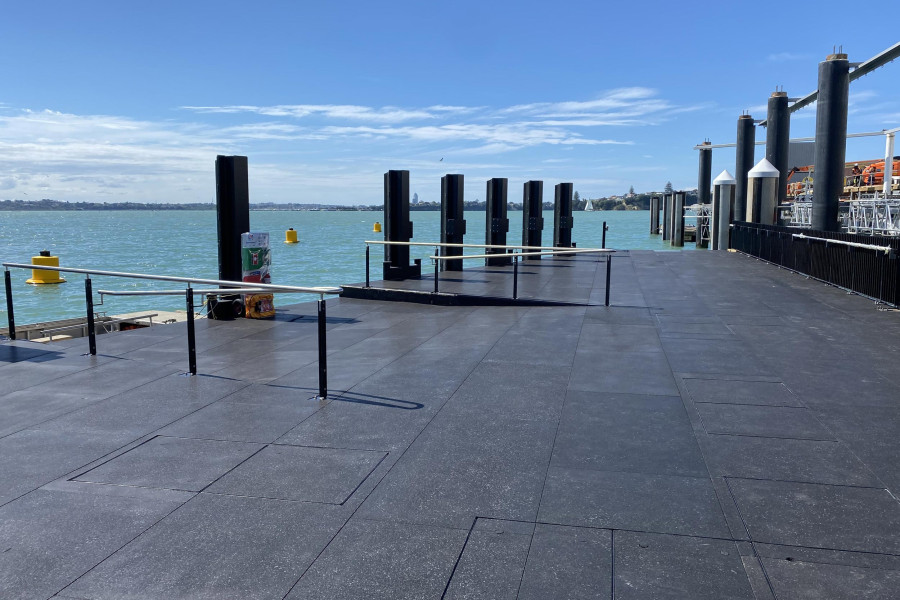
For Auckland Transport’s recent upgrade of the Auckland Ferry Terminal pontoons and gangways, Isthmus Architects worked with Burgess Matting and Surfacing for the fabrication, supply and installation of the complete rubber surface. To meet the project's technical and environmental demands, Burgess' Rebond Impact Rubber Tile was specified, as well as a specifically customised herringbone version designed to provide greater slip resistance on inclines.
Project requirements and benefits
The ferry terminal project involved five pontoons and two gangways, requiring a a slip-resistant, resilient, and constructible surface across approximately 3000m² of floating infrastructure.
Early engagement with Isthmus focused on determining the application environment, surface geometry, and operational expectations. The project required:
- A slip-resistant surface across both sloped and flat elements.
- A tile format that aligned with gangway dimensions.
- A durable finish able to withstand heat loading on exposed metal pontoons.
- A low-maintenance surface suited to high foot traffic.
Custom tiles were developed specifically for this application, and installation required addressing several environmental and technical constraints:
Design considerations
Slip resistance on slopes and flat surfaces
Gangways and ramps required compliant performance on inclines, making slip resistance a primary design driver. Wet slip testing carried out in accordance with AS/NZS 4586:2014 returned a mean coefficient of friction of 0.46, above the minimum requirement of 0.40 for horizontal pedestrian surfaces. To achieve higher performance on sloped accessways, Burgess developed a custom herringbone surface profile that introduced a more pronounced texture, improving grip and water displacement.
Durability and impact performance
The marine environment includes continuous exposure to moisture, temperature variation, and UV. The Rebond tile is a compression-moulded recycled rubber system with a smooth, colourfast matt surface and a larger fibre backing designed to absorb impact and reduce vibration transfer. For this project, tiles were manufactured in two formats:
- Impact Tile: 2000 x 1000 x 15mm, 30kg each.
- Herringbone Tile: 2000 x 910 x 15mm, sized to align with gangway widths and eliminate offcuts.
Environmental and site-driven requirements
Beyond performance specifications, the client required New Zealand manufacturing. Burgess’ local production allowed the architects to tailor the tile dimensions and textures to the pontoons and gangways, including custom mould development.
Site-specific challenges also shaped design responses. Frequent bird activity meant surface marking was inevitable; Burgess incorporated a grey fleck into the tile surface to visually soften the appearance of organic debris, drawing on their capability to produce tiles with custom EPDM fleck options
Compliance pathway
For this application, the primary performance requirement was slip resistance, aligning with NZBC Clause D1 Access Routes. The independently verified wet coefficient of friction of 0.46 meets the minimum requirements for horizontal pedestrian surfaces and supported acceptance by the BCA. Other NZBC clauses such as B2 Durability were addressed through material composition and New Zealand manufacturing, while the external marine setting meant internal fire requirements (e.g., critical radiant flux) were not applicable to this project.
Design and install process
Adhesion to epoxy-coated metal substrates
The pontoons were hollow metal structures coated in epoxy. Ensuring reliable adhesion was critical. Burgess worked with Uzin adhesive specialists to identify a suitable polyurethane adhesive system, drawing on Uzin KR 430 — a heavy-duty adhesive compatible with rubber flooring and metal substrates. On-site testing and manufacturer-backed warranties provided assurance of long-term performance.
Surface preparation involved abrading the epoxy coating with nylon pads and applying a full-surface “total stick” methodology to ensure adhesion under thermal cycling.
Complex detailing around access hatches
Each pontoon contained more than 100 service hatches, each with welded upstands. Tiles were manually scribed and cut around these welds, and thousands of plugs were supplied to allow future access without compromising surface finish.
Working in varying climate conditions
High temperatures on the metal pontoons made daytime installation impractical during summer. Burgess’ team adapted by installing two pontoons overnight under floodlighting to maintain adhesive performance.
End result
The Auckland Ferry Terminal project highlights the value of early collaboration between architects, product manufacturers, and adhesive specialists. That collaboration, paired with Burgess' expertise, enabled them to provide rubber impact tiles that were customised and engineered to meet the project's demanding marine transport environment. By combining textured profiles for slip resistance, robust adhesion systems, and tailored tile geometries, Burgess Matting & Surfacing delivered a durable, safe, and maintainable flooring solution across a complex floating structure.
Get in touch
For design support, product samples, or guidance on rubber flooring solutions for public transport or marine environments, architects and designers can contact the Burgess Matting & Surfacing technical team.
 Popular Products from Burgess Matting and Surfacing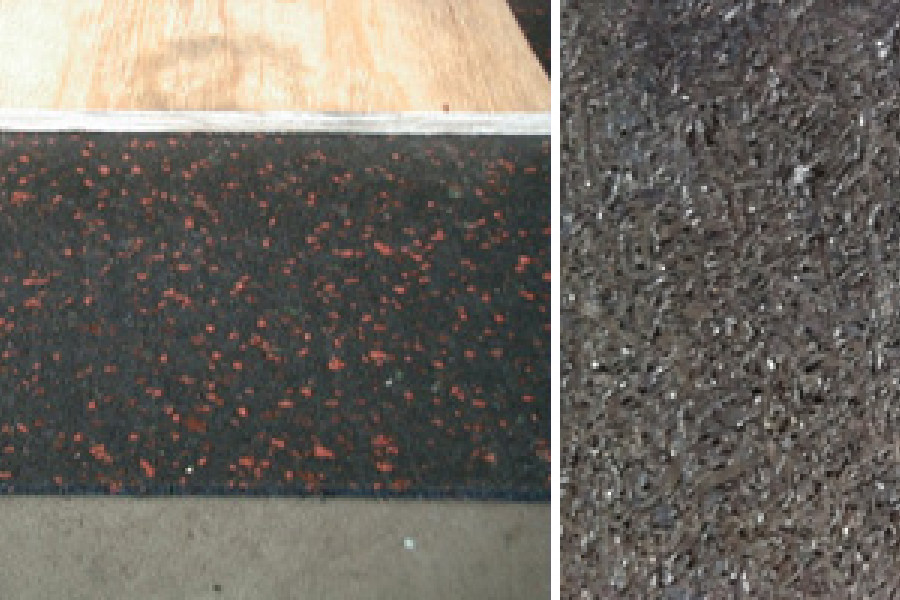
 Most Popular
 Popular Blog Posts