 VANTAGE Windows & Doors
 Roofing Industries
 ALTHERM Window Systems
 Dimond Roofing
 Juralco Aluminium
 dormakaba


 Prolam
 PGH Bricks
 Metwood







 YourQS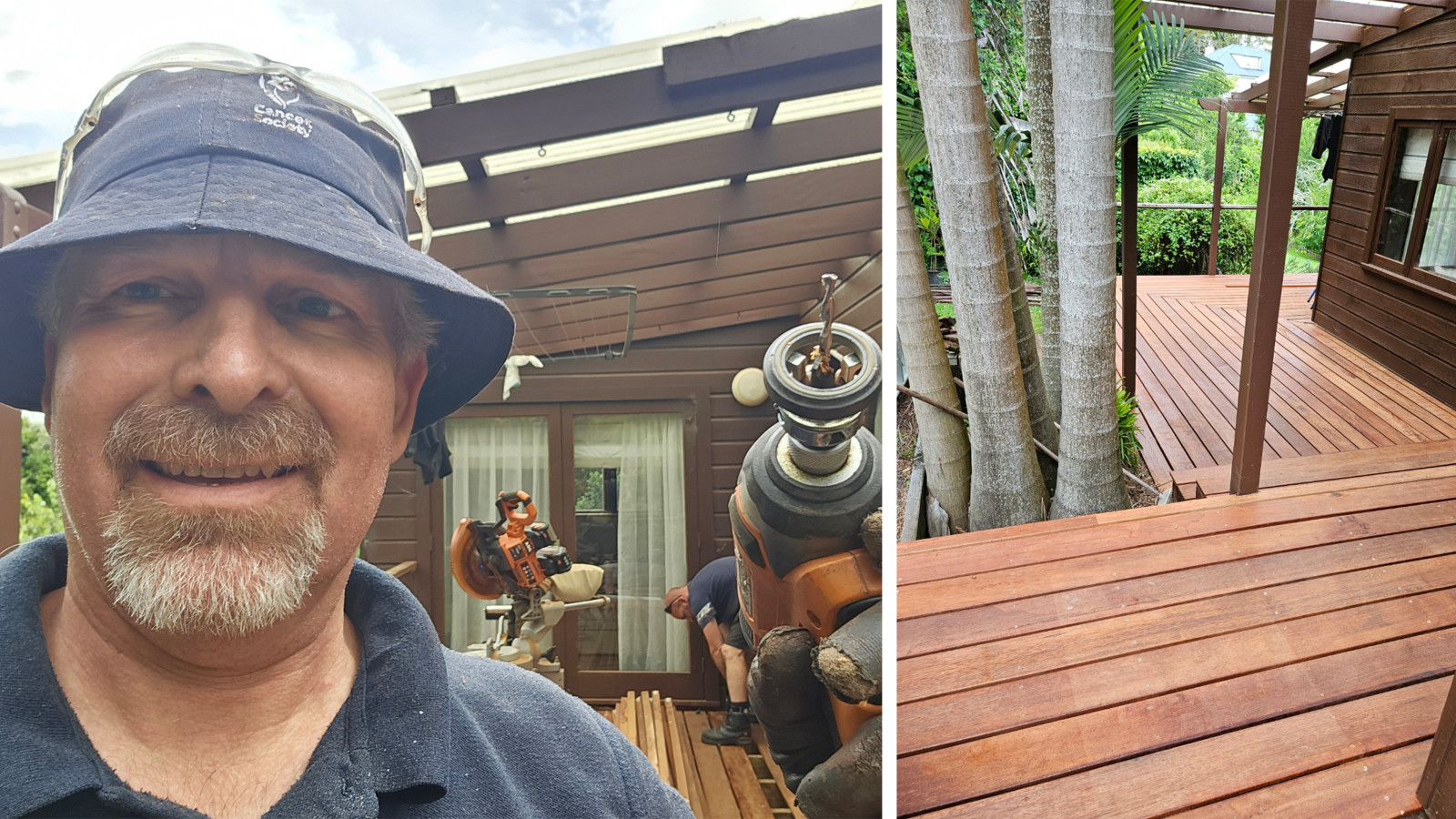
One of my main objectives last Christmas holidays was to replace the 35m² of decking at the front of our house. It was great opportunity to test what I do theoretically every day in the real world. Plus, I ended up with a great looking deck.
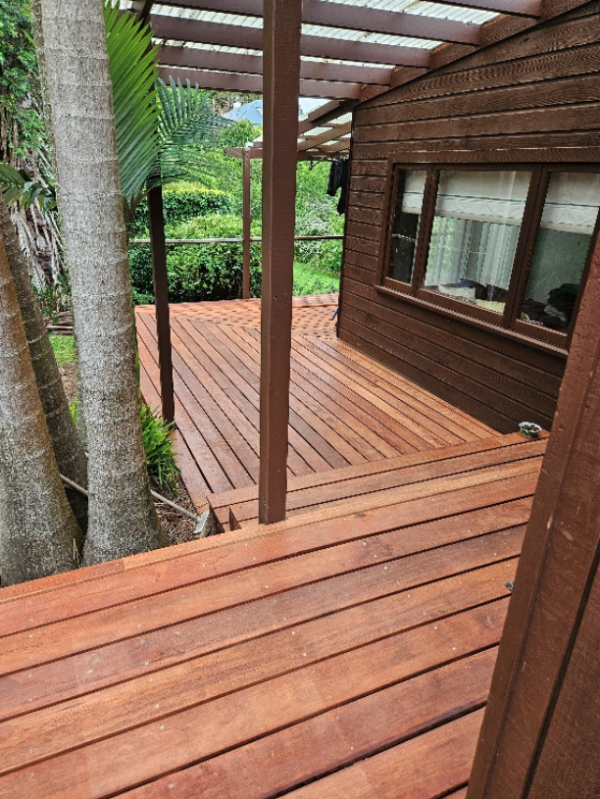
What did I learn?
Visual costing does work
I didn’t estimate the deck with our system before starting. I physically measured it, knocked up a spreadsheet to work out the metres of decking, and added 25%.
Then we almost ran out!
Modelling it in our 3D system afterwards and going back over my workings I discovered that my spreadsheet calculation missed one area.
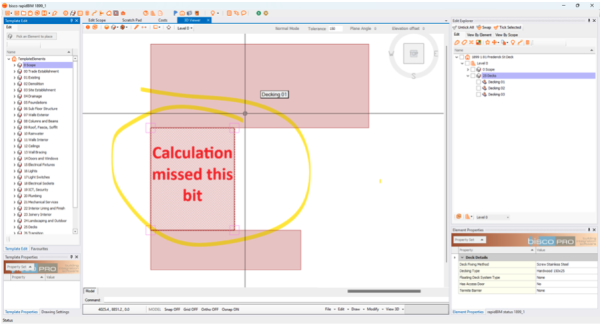
With the visual confirmation it is nearly impossible to make what is an easy mistake in a spreadsheet. The resulting material estimate was spot on with what we used.
Lesson: A picture is worth 1000 words.
It is better to know what you are in for
In my head, the deck was going to take a few days. Then then 3 days in I thought “what I have I let myself in for?” It took me and Josh (one of our QS team) 6 full days so about 96 hours. (I was knackered — it has been a long time since I have done that much physical work in one hit.)
If I’d estimated it first, I’d at least have been mentally prepared for what I was in for.
Lesson: Gut feel is not reliable. Having a meaningful idea at the get-go helps set expectations.
Activity based costing is awesome
Given the fact that I’m old and we don’t do this all the time, our hours came out well versus the system:
| Item | Estimate | Actual |
| Demolition | 22 | 38 |
| Decking | 42 | 58 |
| Total | 64 | 96 |
One thing that we realised was that de-nailing takes a lot of time. If you aren’t also removing the deck structure, you need to allow for the time it takes to remove nails from the joists and clean them up for new decking. To capture this new information in our algorithm, we’ve added this folder to the flow chart.
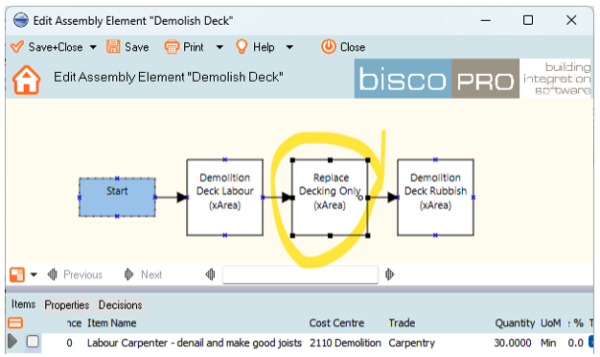
It only kicks in if the decking is being removed but the structure stays.
The beauty of our system is now our whole team benefits from this learning.
Lesson: Our methodology can accurately reflect the real world.
Lesson overall: Get out on site and talk to people
Those of us in professional services are often working in theory. I’ve been lucky over my career to have been able spend time in many aspects of the building sector including hands-on, but most of what we do is still based on theory. Our estimates must cover every cost, but we can’t be experts in them all. Our skill is interpreting other people's expertise and turning this into algorithms that create reliable estimates.
Learning from experts and capturing what we learn from getting on site when we can and is vital.
About Nick Clements
Nick won the inaugural NZIOB 2024 Digital Technology award for his work on 3D estimating in residential construction. He is a Registered Quantity Surveyor and chair of the NZIQS Auckland.
His business, YourQS, specialises in providing cost estimating services to residential builders, architects, and homeowners for both new build and renovation projects. They have completed over 4,000 projects since launching in 2019 working with around 350 builders nationwide.
Nick is the host of the Beyond the Guesstimate podcast where he talks with interesting people ideas on how we can improve as an industry and as businesses within it.

 Most Popular
 Popular Products