 VANTAGE Windows & Doors
 Roofing Industries
 ALTHERM Window Systems
 Dimond Roofing
 Juralco Aluminium
 SPAX
SPAX



 Prolam
 PGH Bricks
 Metwood






 Allproof Industries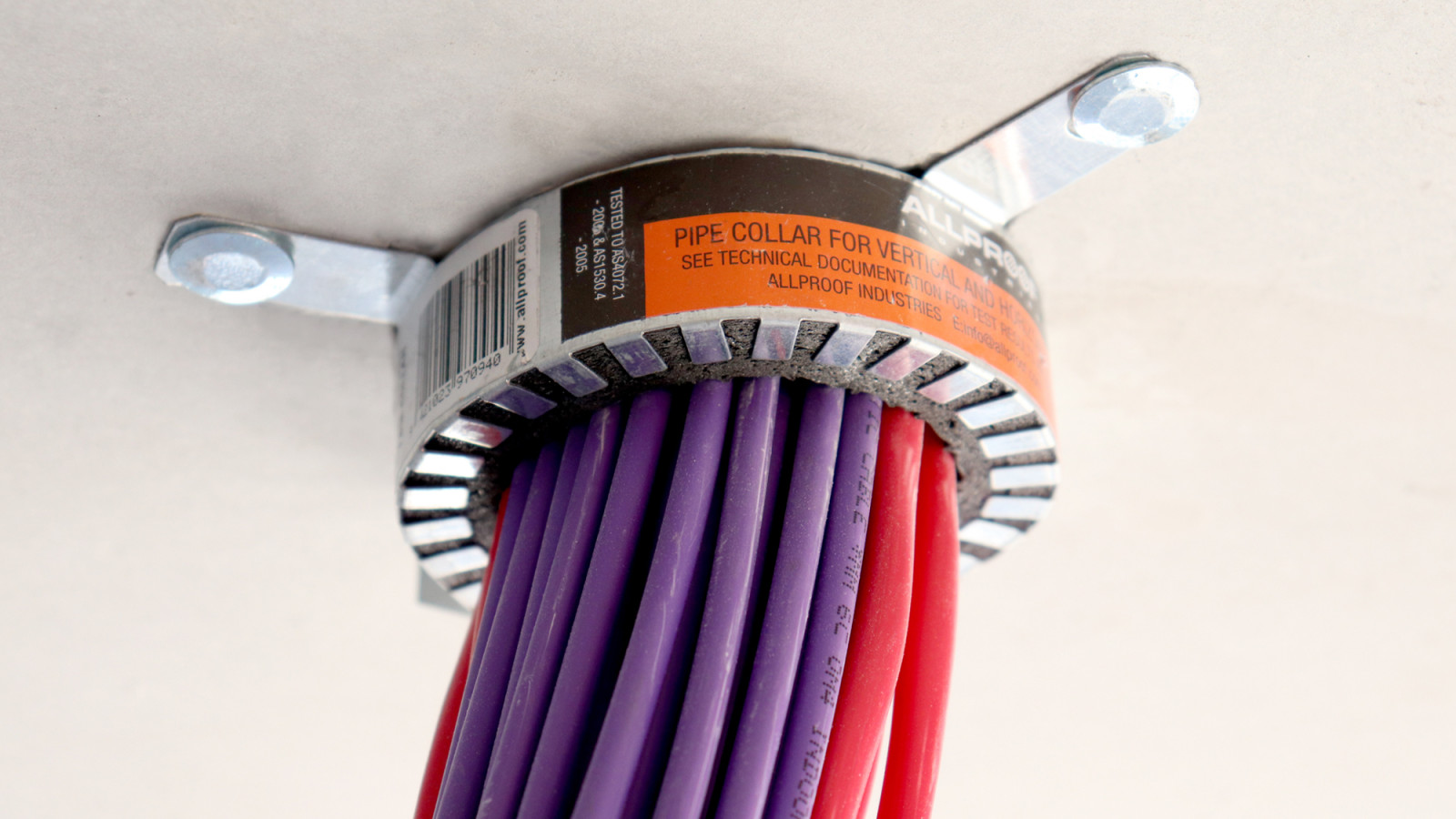
I am encouraged, as I look to the future, watching tower cranes rising from ground level into our city skylines. These cranes signal more than high-rise development; they reflect increasing business confidence, renewed momentum in construction and renovation, and the long-awaited return to vertical growth. As our cities re-energise, now is the time to revisit one of the most technical yet vital aspects of building design: Passive Fire Protection, especially in the context of service penetrations and movement joints.
With growing density and complexity in our built environment, designers, architects, and engineers must think holistically. It’s not enough to erect fire-resistant walls and floors; we need an integrated system that accommodates all building services, plumbing, electrical cables, HVAC and drainage while preventing vertical fire spread, maintaining integrity under seismic or thermal movement, and preserving life-safety performance.
Passive fire protection provides the “silent hero” in a building’s fire defence strategy. While active systems like sprinklers and alarms are visible and familiar, passive systems work invisibly, forming critical barriers that compartmentalise fire and slow its spread.
Under the New Zealand Building Code, Clause C – Protection from Fire outlines the performance requirements for safeguarding occupants, limiting fire spread internally and externally, and supporting efficient evacuation. Designing effective passive fire systems is essential to meeting these obligations, especially in higher-density or multi-storey projects.
These objectives can only be achieved when penetration seals, movement joints, fire-rated lining systems, and building services are considered as an integrated system, not as afterthoughts.
As buildings become more complex, so too do the risks. Service penetrations where pipes, conduits, drains, and cables pass through fire-rated walls or floors, naturally weaken the fire barrier. If they are not properly addressed, fire and hot gases can exploit these openings, compromising compartmentation and creating rapid, uncontrolled vertical spread.
Similarly, movement joints are critical weak points if not properly protected. Buildings move for many reasons: temperature changes, shrinkage, live loads, and seismic activity. New Zealand’s seismic context makes this especially important with joint systems allowing for movement while still delivering fire integrity.
New Zealand’s unique seismic profile means buildings need to be resilient not only in fire, but also during movement caused by seismic action. This is where the choice of passive fire protection system becomes strategically important.
Movement-accommodating systems, such as fire-rated joint systems capable of deforming without losing integrity, are crucial. If a joint opens even slightly during movement, flames and hot gases can breach the barrier, rendering the fire protection ineffective. A resilient system maintains fire performance when subjected to displacement, supports the building’s evacuation time, protects fire and rescue access routes, and helps maintain compartmentation integrity during aftershocks. This level of resilience is essential for life safety and for protecting long-term building functionality.
As Auckland, Wellington, Christchurch and other New Zealand cities continue their upward growth, the importance of well-integrated, rigorously tested passive fire protection has never been greater. Tower cranes may be the visible sign of momentum, but beneath the surface, it is the invisible network of fire-stopping systems, barriers, and resilient joint technologies that protects people, buildings, and our future.
By selecting systems with proven performance from Allproof Industries and TBA FIREFLY, and by designing Passive Fire Protection into the building fabric from the earliest stages, we can build vertically while ensuring the highest levels of fire resilience, compliance, and confidence.
Both Allproof Industries and TBA FIREFLY support designers by providing detailed installation guidance, case studies, and up-to-date test reports which are all essential for evidence-based specification.

 Most Popular
 Popular Products