 VANTAGE Windows & Doors
 Roofing Industries
 ALTHERM Window Systems
 Dimond Roofing
 Juralco Aluminium
 SPAX
SPAX



 Prolam
 PGH Bricks
 Metwood







 YourQS
We are at the bottom of the world. Without our own oil infrastructure. An economy heavily dependent on imports (completely for fuel). New Zealand is particularly exposed to the impacts of this.
All of us in the building sector are going to be managing costs in a dynamic market. Whether is it managing project budgets, processing claims, or estimating new work.
Why now is different?
Construction price inflation is not something new. We all experienced it recently with the post Covid construction boom. What feels different this time is the speed of the increase of fuel costs and the impact of this.
This is the fuel board prices to 23/03/26 as downloaded from MBIE and Gaspy to add the 26/03/31 best prices in Auckland.
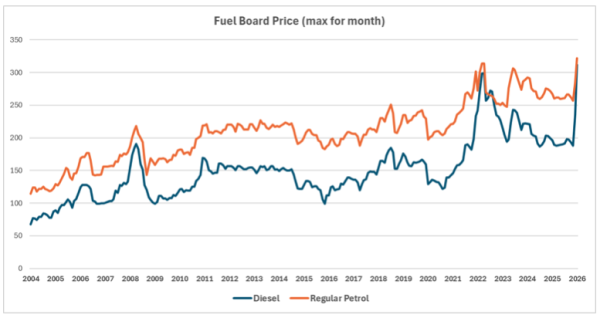
This rapid increase has seen the construction supply market respond in a way that I haven’t experienced. This week we have been notified that a skip bin supplier is adding an immediate $30 per load temporary surcharge to each delivery. A concrete supplier adding $6.60/m³. Bulk aggregate, very transport dependent, I’ve heard is up by 20% in Auckland. Australian producers of plastic pipe have advised an immediate 30% increase. Local distributors have issued a warning but no numbers.
This is different to the past inflationary periods that I have worked through. “Normal” inflation takes a while to work its way through the price increase notification process allows some reaction time. These local fuel-cost-based increases are immediate. We have little time react and I expect most contracts will struggle to deal with this.
The US appear to have entered this war without a clear reason for doing so or clear objectives. So, no one can predict when they decide they have achieved their aims. We have only really seen the short-term impact of the fuel cost so far. The impact of production input costs and supply chain inflation are still to come. The extent of these is unknown.
Options for managing this “instant inflation”
The concept of Fuel Adjustment Factors (FAF) has been around of a while in the transport sector. This is a variable weekly surcharge applied by transport and logistics companies. It allows them to transparently manage fluctuating diesel prices. Many transport companies publish their FAF tables. This is the current Mainfreight FAF table:
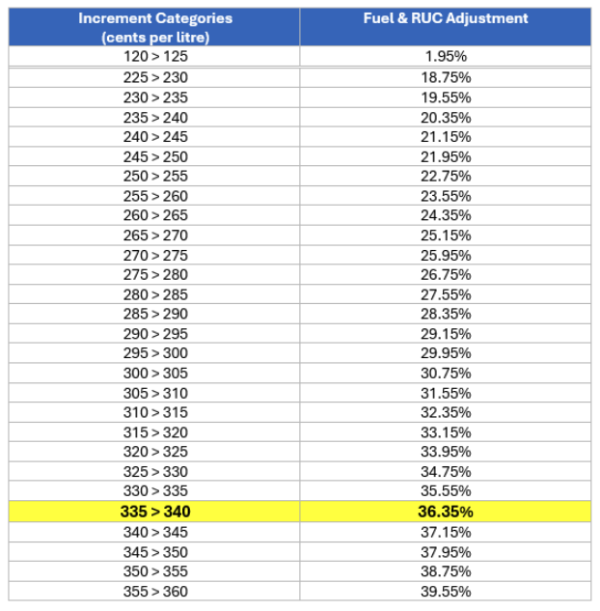
This is simple to apply when we are talking about transport costs. It doesn't apply directly to products or other services. This is because transport is only a portion of the cost.
For assessing cost increase claims, then FAF is good starting point. The calculation would involve determining to the FAF rate. (Note: take out any RUC (Road User Charge) component for non-transport adjustments.) These are weekly so would probably require averaging for a monthly claim. The more challenging aspect is determining how FAF affects a good or service.
With trades like excavation hourly rates, it is probably 100% of the cost as their operating costs basis are like those of trucks. For products, supplier input is likely needed to substantiate the FAF component.
Managing longer term inflation
This highest interest rate that I paid on my first home mortgage was 23%. This was because inflation was rampant. Industry generally had contractual tools and supporting pricing index information to manage this. Low inflation meant these mechanisms fell away with fixed price contracts becoming common.
The post Covid inflation was a wake-up call for all. Anecdotally, I’m hearing lessons weren't learned. Everyone felt the construction slowdown of the Reserve Bank bringing inflation under control. The resulting more competitive environment has seen price escalation clauses negotiated out. This means that both “slow and fast inflation” could be a material contract risk.
Whether you can pass on these cost increases will depend on the terms of the project contract.
It may be possible that your contract contains a force majeure clause. War is generally considered a force majeure. Whether a war somewhere else is, that might be different. In New Zealand, force majeure is not a statutory or common law doctrine. The provision for it comes down to the contract specific wording.
Supply shortages
MBIE have teams working to try and assess the potential impact of supply shortages and cost increase on the wider New Zealand economy. Whether anyone can impact this is a different question. Running out of fuel is a possibility, though doesn’t appear likely in the next 50 odd days. How likely after that is another unknown. If it does happen, then delays will be inevitable.
The ability for parties to claim for delays will again depend on your contract. Delays because of fuel shortages or the war, are probably not reasonably foreseeable at the time of pricing. They could qualify for an extension of time variation claim.
If pricing now, then tag for potential for impacts to both built cost and time. Make any provision for cost inflation or time clear.
Inflation is sticky
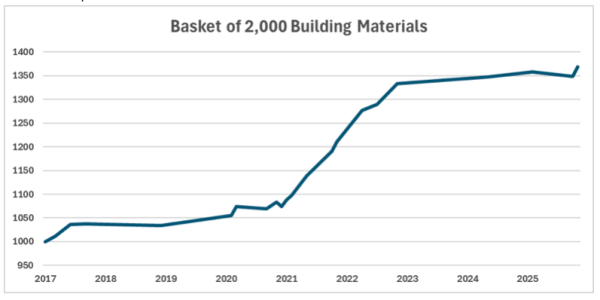
Once prices go up, they don’t tend to come down. We’ve been tracking a basket of material costs since 2107. This shows that the post Covid inflation stuck.
Should we be pricing increases into our quotes?
Based on this, yes. I sat in on a NZ Trade and Enterprise presentation about managing supply chain risk. It wasn’t good news. They expect an effect on shipping for the rest of the year, even if the war ends soon. Insurance rates have increased and insurers take time to review risks. Shipping is taking 12 days longer. Not only does this add cost but it ties up capacity. Less capacity means higher prices. They were quoting examples of container cost increases of up to $US4,000.
Where should the price risk sit?
Trying to predict what is going to happen and price it in is a risk. The risk should rest with the project principal or asset owner. Those involved in the construction process are only there temporarily. The owner has the asset for life so can amortise the risk.
My suggestion is to ensure that any contracts have price escalation clauses.
Ensure detailed estimates can substantiate the cost basis. Composite $/m² rates without a buildup will make it hard to argue the starting cost.
Owners or principals should include a price increase contingency in their budgets and time buffer in schedules.
We have built price inflation models for clients wanting build in this to their budgets. Prepare a cashflow estimate and apply expected inflation over time to this. The further out the payment is due, the more the cost will inflate, so the costing model need to reflect this.
Communication is key
The best solution to uncertainty is open and clear communication. Contracts can require early warning of matters that may materially affect the contract price.
It is generally in no one’s interest for a party to get into financial difficulty or collapse. You’d like to hope all involved can apply the principles of fairness and reasonableness. Naïve on my part maybe.
Disclaimer
This is an opinion piece and does not constitute legal advice. Should you have any concerns, please discuss with your lawyer.
About the author
Nick Clements
Director YourQS Ltd
MNZIQS Reg QS
Chair Auckland Branch NZIQS
Nick Clements is inaugural winner NZIOB Digital Technology award for his work on 3D estimating in residential construction.
His business, YourQS, specialises in providing cost estimating services to residential builders, architects, and homeowners for both new build and renovation projects. They have completed over 3,800 projects since launching in 2019 working for around 300 builders nationwide.
Nick is also the host of the Beyond the Guesstimate podcast where he talks with interesting people ideas on how we can improve as an industry and as businesses within it.

 Most Popular
 Popular Products