 VANTAGE Windows & Doors
 Roofing Industries
 ALTHERM Window Systems
 Dimond Roofing
 Juralco Aluminium
 SPAX
SPAX


 Prolam
 PGH Bricks
 Metwood






 EBOSS
EBOSS
In July 2025, we surveyed over 500 architects and designers to capture a broad perspective on industry sentiment. Funded by the BRANZ Building Research Levy, the 2025 Architect Sentiment Report delves into both current attitudes and future expectations. The data highlights that architects and designers are navigating a challenging landscape, but are beginning to feel more optimistic about the future.
The contraction has been on multiple levels
The report highlights that architects have seen a very significant contraction over the last three years, with current workload decreasing from 87% in 2023 to 74% in 2025.
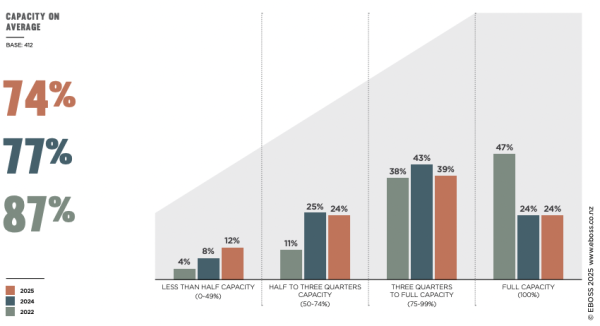
Simultaneously, practices are getting smaller and working fewer hours, meaning this contraction is happening on multiple levels, which is why it's felt so much stronger than these individual numbers might suggest.
Smaller practices of 1 - 5 staff members have halved in size, on average going from four down to two people. And our largest practices in the market have lost on average 20 staff over the last year and a half.
In our survey 20% of practices reported that they have too many staff. And since the July survey we’ve seen larger practices further reduce their headcounts.
Are we close to the bottom of the cycle?
It’s been a tough market, but if we lift our gaze to the future there are signs that we are getting close to the bottom.
While the net demand score for architects and designers nationally is still negative on average in 2025, indicating a continued decline, the pace of that decline has slowed, with many architects confirming an increase in demand for their services in the last twelve months.
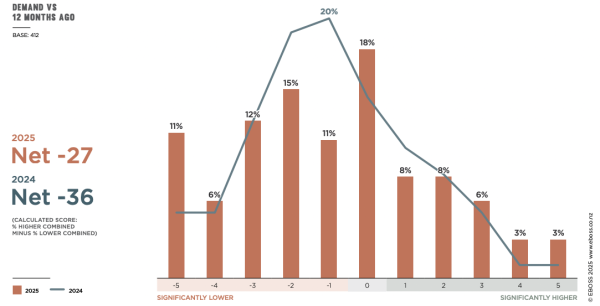
Sole practitioners, residential-focused firms, and those in Wellington and Auckland are most affected by the slowdown. Meanwhile, larger businesses with a wider portfolio of work have shown some stabilisation, with net sentiment improving from -57 in 2024 to -4 in 2025.
Seven in ten designers say they have adjusted their approach to take on a wider range of projects. These include smaller renovations and alterations, which now make up 49% of the average workload.
New starts also paint a similar picture, with more architectural firms seeing new starts increase. Inquiries, looking forward, show a similar pattern.
We’re seeing a two-speed recovery
You often hear of a K-shaped recovery. I prefer to think of it as "two speeds." This points to the fact that some practices are in much better shape and reporting greater opportunities in terms of forward workload than others.
As mentioned, sentiment still remains low for sole practitioners, those with a residential only focus, and those based in Wellington and Auckland. But what do we know about firms with a positive outlook?
The data tells us that firms in the South Island are seeing an increase in demand. Those focusing primarily on commercial work have also seen a larger increase in demand, and larger firms are experiencing more growth compared to smaller companies.
And while many studios have downsized over the past two years, 18% of practices plan to hire in the next 12 months, jumping to 43% of those with 100 or more staff now. Those focused on commercial projects have a greater intention of hiring.
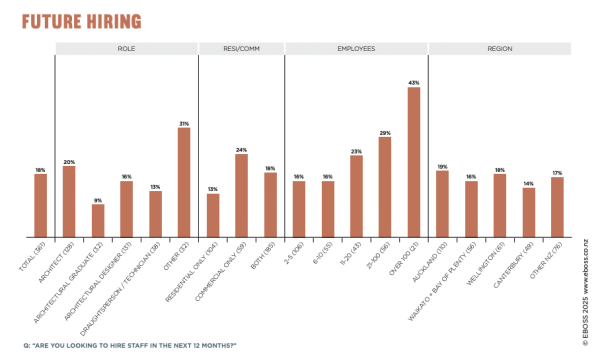
So what’s driving improved sentiment among commercially focused and larger firms?
Studying the comments from architects we see four key factors:
- The growing certainty of government investment particularly in health and schools
- The "Investment Boost" programme which certainly seems to have a positive impact on commercial building, particularly in industrial sectors like factories and storage.
- The reuse or upgrading of existing buildings which is becoming popular with building. Currently 88% of all building consent approvals for commercial buildings are alterations and additions.
- Renewed interest from overseas money coming into the New Zealand market and investing.
Together these factors are increasing confidence in the market — with the potential for greater levels of commercial work on the horizon.
What’s next?
While the sentiment report paints a challenging picture for the New Zealand design industry, within these challenges, there are distinct pockets of growth. The industry is adapting to the current environment by diversifying the types of projects undertaken. Staffing levels remain a concern, but there is optimism for future hiring. Overall the industry is resilient and poised to navigate the challenges ahead with a cautious but optimistic outlook.
The full report includes more detailed data on industry sentiment, forward workloads, staffing and cost pressures. We hope the data collected will help inform the wider industry and foster collaboration to face the challenges ahead.

 Most Popular
 Popular Products