


 VANTAGE Windows & Doors
 Roofing Industries
 ALTHERM Window Systems
 Dimond Roofing
 Juralco Aluminium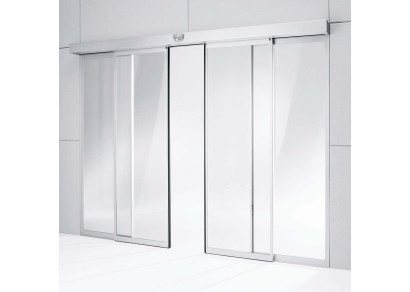
 dormakaba


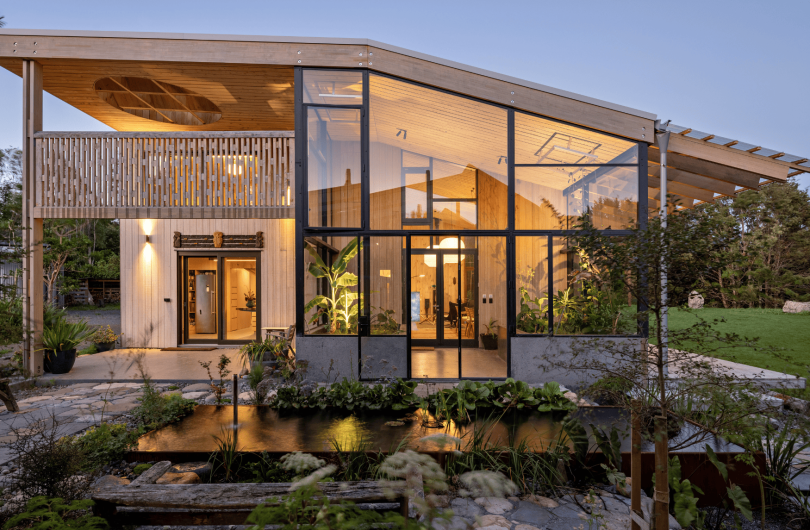
 Prolam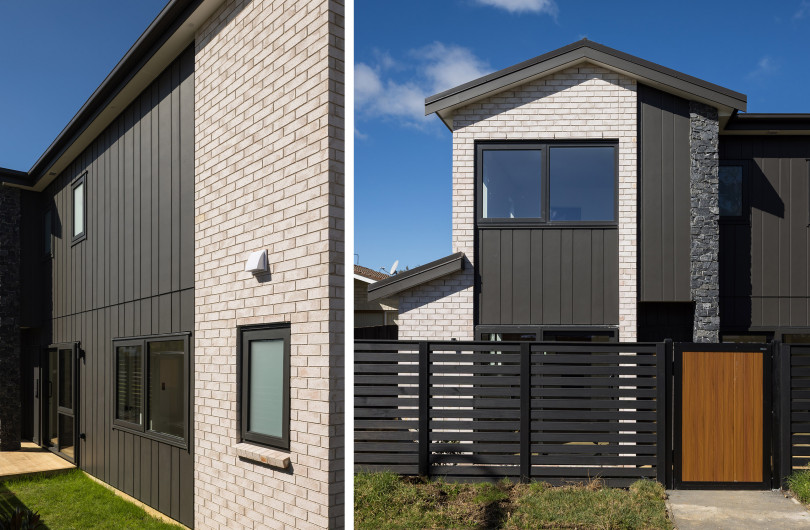
 PGH Bricks
 Metwood







House Style Guide
To ensure consistency and quality, our editors will review your EBOSSNOW article and reserve the right to make changes to it. If you want to avoid your article undergoing extensive editing, we recommend familiarising yourself with the following common issues with articles in our House Style Guide:
Write for architects and designers — not homeowners!
EBOSSNOW is an industry publication. Architects and designers are the primary audience, followed by builders, engineers and other industry professionals. Keep this audience in mind when writing articles.
Example: Rather than referring to the reader as a homeowner, eg. "your home" or "your kitchen", reframe your articles to address a specifier's point of view, eg. "your client's home", "your client's kitchen", "your project."
Refer to 'architects and designers' — not 'specifiers'
'Specifiers' is a term that tends to be used by those of us who work with architecture and design professionals, but is not a term they use often to refer to themselves. With that in mind, we rephrase any mentions of 'specifers' to 'architects' or 'architects and designers'.
Example: "The xyz deck design tool helps save specifiers time when designing decks" is changed to "The xyz deck design tool helps save architects and designers time when designing decks".
Refer to your company by name — not "we", "us", "our"
To reduce confusion and ensure readers understand that your article is referring to your brand (and not EBOSS or one of the other 200+ suppliers on our site), please write your articles in the third person, i.e. not using personal terms like "our" and "we".
Example: Instead of writing "We supply our customers with cost-effective roofing," write "BRAND NAME supplies its customers with cost-effective roofing."
Avoid vague, cheesy and clichéd marketing language
Architects prefer to read fact-based, accurate descriptions of products and their uses so that they can make well informed decisions. Avoid using flowery, decorative language and company slogans. Clear, concise language is best.
Avoid clichés such as “game changer” or “revolutionary," — these don't give architects any specific information on the product itself. And don't get caught up in cheesy language that sounds pretty but doesn't say much, such as "where light, space and design converge".
Likewise, avoid vague language such as "In the realm of architecture..." or "In modern design..." As an architecture and design publication designers know your content will be design related, so you can jump to the specifics of what you'll be talking about (such as a specific application).
Beware of AI content generators which tend to default to this style of language if not prompted otherwise.
For example: Instead of "In the realm of architecture where light, space and design and converge," be more specific "When specifying glazing systems for office buildings, it's important to consider light, glare and energy-efficiency."
Avoid unqualified superlative statements
Any sentence that says a company/product is "the best", "the only", "the superior" or "the leading" is unqualified and not helpful to architects wanting honest, evidence-based information on a product's performance. We suggest rewording these to a neutral statement or remove them entirely.
Example: Instead of writing: "X Brand Cladding is the best aluminium cladding on the market, offering superior performance," get straight to the specifics and write "X Brand Cladding offers excellent durability thanks to its robust aluminium composite construction. The system meets NZBC requirements for B1 and E2, and is backed by a CodeMark certificate."
Don't make direct comparisons to competitor's products
Don't make direct comparisons to competitor's products or defamatory comments — there are usually legal ramifications! Comparisons can also make your company seem petty. It's best to focus on the benefits of your product.
For example: Instead of "While some deck oils wear away in a matter of months, xyz deck oil lasts up to two years," write "XYZ brand deck oil is tested to last up to two years between application, making it a smart low maintenance choice for family homes and holiday baches alike."
No copyrights©, registration® signs and trademarks™
Like most publications, we remove these from brand names and product names as they impair readability and give the article a cold, legal feel.
If needed, you're welcome to include a disclaimer in the footer of your article.
Avoid uppercase in proper nouns unless an acronym
We are reluctant to publish uppercase in brand and product names unless the name is an acronym, as uppercase is demonstrated to be difficult to read, causing rivers in text and comes across as 'yelling'. We review each request for uppercase based on whether the word is an acronym or there is demonstrated consistency across the web in how the company presents the brand.
Capitalisation rules
- Article titles will appear in title case, eg. "Low Maintenance Aluminium Cladding for a Coastal Home"
- Subheadings will appear in sentence case, eg. "Key benefits" "How to select the right cladding system"
- There is no capitalisation when talking about architects and designers generally, but job titles are capitalised when talking about a specific architect or designer. eg. "Our design service helps architects save time," or "John Smith, Architectural Designer at ABC Design says that working with XYZ product helped him save time"
Use high quality images
Architects are visual people so a poor image will discourage them from reading your article. Don't use images that are poor quality or too low res (there should be no pixellation when viewing these in the article gallery).
We don't recommend the use of stock images as these tend to make articles appear more marketing-like or corporate in nature, rather than educational. AI generated images also have this effect. In-situ photos and product photos work best.
See our image guidelines for full specs
Other semantic house styles
- Use NZ/UK spelling (eg. 'customised' rather than 'customized')
- Include full measurements with units, and no space before “mm” (e.g. 600 x 600mm).
- Write 'and' in full, rather than '&'
- Don't frame words in "quotation marks" unless they are quotations.
- All dashes to be em dashes e.g. '—' not hyphens '-' (OSX shortcut is pressing opt + shift + - on your keyboard).
- Don’t use dashes in titles, always use colons (:).
- All captions finish with a period.
- If the noun is plural and ends in -s, add only an apostrophe.
- Hyphenate compound adjectives only if preceding a noun, e.g. either 'heat-resistant benchtop', or 'the benchtop is heat resistant'.
- Facade not façade.
- Italics only used when referring to published sources e.g. The NZ Herald.
- Hyperlinks that form a full sentence have the end period omitted.
